Thursday, January 12, 2023

The Great Gatsby- Movie Review

 Thinking Activity

The Great Gatsby


This blog is written as a part of a thinking activity assigned by Dr. Dilip Barad sir, Department of English MKBU on the Movie The Great Gatsby which is based on the novel with the same title by F. Scott Fitzgerald.


Introduction of the Novel The Great Gatsby:


The Great Gatsby is third novel by F. Scott Fitzgerald. It was published in 1925 by Charles Scribner’s Sons. The novel is set in Jazz Age New York, which tells the tragic story of Jay Gatsby, a self-made millionaire, and his pursuit of Daisy Buchanan, a wealthy young woman whom he loved in his youth. It was not successful while it was published but the book is now considered a classic of American fiction and has often been called the Great American Novel.


On 3rd January 2023, Dilip Barad sir organised screening of the movie The Great Gatsby which is based on the novel with the same title by F. Scott Fitzgerald. This screening was organised to have a better understanding of the novel.

Movie: The Great Gatsby:-


The Great Gatsby is a 2013 historical romantic drama film based on the 1925 novel of the same name by F. Scott Fitzgerald. The film was co-written and directed by Baz Luhrmann.


Release date: 17 May 2013 (India)

Director: Baz Luhrmann

Story by: F. Scott Fitzgerald

Adapted from: The Great Gatsby

Nominations: Academy Award for Best Production Design, Academy Award for Best Costume Design

Each and every element of the novel is well captured by Baz Luhrmann in this movie where he uses various symbols to give Cultural effects and state of mind of people like Jay Gatsby is who is newly wealthy and Tom Buchanan and Daisy who belongs from wealthy family and how the differentiation is taken place between both the class.

So as an observer I have found that the movie captures all the aspects very clearly. All the concepts are presented effectively.

How did the film capture the Jazz age, the roaring Twenties, the flappers and the Prohibition Act in America 1920?


Jazz age, the roaring Twenties, the flappers and the Prohibition Act in America 1920 are the significant concepts during the twentieth Century. All these aspects are intertwined. Jazz and flappers are the two major aspects of the Roaring twenties or the twentieth century. So let's try to understand each one by one and how it is presented or captured in the movie.


The Roaring twenties:-

The Roaring Twenties, sometimes stylized as Roaring '20s, refers to the 1920s decade in music and fashion,as it happened in Western society and Western culture. It was a period of economic prosperity with a distinctive cultural edge in the United States and Europe, particularly in major cities such as Berlin,[2] Buenos Aires, Chicago, London, Los Angeles, Mexico City, New York City, Paris, and Sydney.

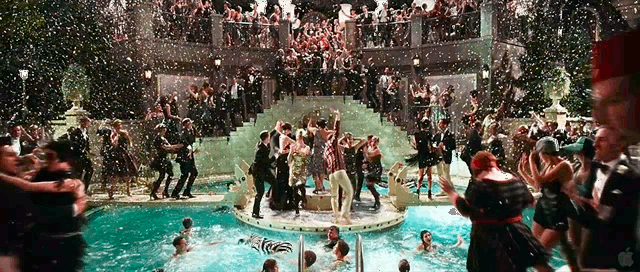
  The Great Gatsby captures the exuberance of the 1920s. It portrays the darker side of the era, and a pointed criticism of the corruption and immorality lurking beneath the glitz and glamour. Through the movie we can see glamour and glitz everywhere but what is behind this is under the dark shadow that one has to encode. Big parties thrown by Jay Gatsby are being liked by those party lovers but no one knows where the money is coming from. People waste their time and money behind such things. We come to know that the secret of Gatsby's wealth is Share market and most probably bootlegging- the illegal business of liquor. While considering this point one has to notice the point that this king of glamour is done by newly rich people like Gatsby. Each kind of glitter- glamour can be categorised under roaring Twenties like Flappers, Jazz and Prohibition act in America.


Flappers:-

Flapper" is the word used for young women known for wearing short dresses and bobbed hair and for embracing freedom from traditional societal constraints. Flappers are predominantly associated with the late 1910s and the ’20s in the United States.
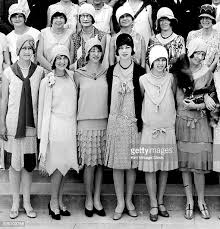
The movie captures the Flappers very accurately. The young ladies Like Daisy and Jordan Baker. Daisy married Tom because he is a wealthy man and she is lying on her husband's money and doing nothing else. When she meets Jay Gatsby and after watching his big mansion and all the prosperity she now wants to be with him.


She is not even sure what she actually wants to do and with whom she wants to be. Here money and property play a vital role to control Daisy's desire.She doesn't have any job except beautifying herself and showing off money and property. She does not have his own brain to think of like other flappers. In appearance also she wears short dresses and boobed hair.
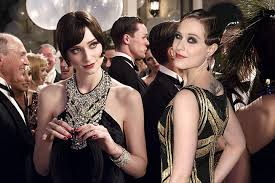
Jordan Baker is a young woman who is always found in the Buchanan house and with luxury. Her appearance is also like Daisy. In the movie we somewhat find attraction between her and Nick but she constantly goes with another man. Her constant appearance in the Buchanan house proves that she is relying on others. She is a free woman but she is not doing what she has to.

The prohibition act in America 1920:

 Prohibition act is legal prevention of the manufacture, sale, and transportation of alcoholic beverages in the United States from 1920 to 1933 under the terms of the Eighteenth Amendment. Although the temperance movement, which was widely supported, had succeeded in bringing about this legislation, millions of Americans were willing to drink liquor illegally, which gave rise to bootlegging- the illegal production and sale of liquor  which was capitalised upon by organised crime. Crimes like these would not happen if the government did not ban alcohol and the most important reason is that people wanted to consume alcohol. So many campaigns were also held to remove this act.

In the movie the great Gatsby Jay Gatsby is the one who is a bootlegger- he is doing illegal business of liquor. Though drinking alcohol was prevented legally, in his parties people can drink as much liquor as they can. Cinematographer has absorbed the idea presented in the novel in a very good way in the movie. 


It is the truth universally acknowledged (as Jane Austen begins her novel 'Pride and Prejudice') that people always do those things at double speed which are prohibited.

Like, in Gujarat there is a complete prohibition on manufacture, sale, and transportation of alcoholic beverages. But in India, Gujarat is at top in consuming alcohol. This indicates when there is any kind of prohibition over anything, there always lies a chance to have an illegal business of it. People will not stop consuming alcohol, but as a result of prohibition they may get liquor of lower quality. The Lattha kand in Gujarat is the result of it.


2. Difference between the novel and the movie 'The Great Gatsby'

        Whenever we tend to compare the film and the novel, we have to consider some sort of changes that the filmmaker has made in the movie and how it creates the overall impact on the viewers. Basically the movie 'The Great Gatsby' is an impactful film and in many ways is faithful to the novel. Though the filmmaker has made so many changes. So let's try to analyse the changes which Luhrmann has done in the movie 'The Great Gatsby'.

        The chief change that Luharmann has done is the beginning. The movie begins with Nick Carraway who is in a sanatorium because he is diagnosed by a doctor with some sort of Morbidly alcohol. The other change in the story is that in the novel Nick refers to get be as the man who gives his name to this book. Whereas in the movie Nick first gives it the title 'Gatsby' and then adds 'The Great'. In the novel Nick says that he has consumed alcohol twice in his life but in the movie he is shown drunk more than that.

        The relationship between Jordan and Nick is portrayed differently in the movie. In the novel they become a couple and break up near the end of the novel, whereas in the movie we can't find even the development of their relationship. The scene of the apartment Party is also different in both forms. In the novel Tom and Myrtle disappear and reappear before other guests arrive. Whereas in the movies Luhrmann describes so many things together. Luharmann's Nick wakes up at home and doesn't know how he got there, while in Fitzgerald's novel he goes to the station at 4 O'clock for the train to get home. 

          The lunch with Wilson is described by Luharmann differently. In the book Gatsby takes Nick to lunch where he introduces Nick with Meyer Wolfsheim Whereas in the film Gatsby and Nick go to the barber shop and see Wolfsheim. This meeting is also depicted differently. Luharmann also cuts out two characters, one his maid The Finnish Woman and Ella Kaye, to whom in the novel the wealth of Dan Cody goes whereas in the movie it goes to Gatsby. 

        Jay Gatsby's death and funeral is also differentiated in the film. In the novel Gatsby is murdered by George Wilson but Fitzgerald doesn't depict the murder. In both the movie and the novel Gatsby is waiting for the phone call of Daisy, but in the film Nick calls and his phone ring Gatsby hears at the end and he dies believing that that call was of Daisy. None of that happens in the novel. In both the versions, Gatsby dies loney. But in the film Gatsby's Father arrives unexpectedly. 


The Valley of Ashes is an important setting in the movie 'The Great Gatsby'. The filmmaker has captured the concept of Valley of ashes in an excellent way and has given more essence to the idea of F. Scott Fitzgerald. The Valley of Ashes is an unpleasant place that reveals the dark side of American society in the 1920s. Ultimately, it represents the breakdown of morality caused by extreme wealth inequality. It is in stark contrast to settings such as East Egg, West Egg, and Manhattan.

In the movie we can see that many times the Filmmaker moves the camera from East to West and West to East Egg through the valley of ashes to describe the dual condition of the society and unequal distribution of wealth. 

How did the film help in understanding the symbolic significance of 'The Valley of ashes', 'The eyes of Dr. T. J. Eckleberg' and 'The Green light'?

The valley of ashes:

The Valley of Ashes is an important setting in the movie 'The Great Gatsby'. The filmmaker has captured the concept of Valley of ashes in an excellent way and has given more essence to the idea of F. Scott Fitzgerald. The Valley of Ashes is an unpleasant place that reveals the dark side of American society in the 1920s. Ultimately, it represents the breakdown of morality caused by extreme wealth inequality. It is in stark contrast to settings such as East Egg, West Egg, and Manhattan.

In the movie we can see that many times the Filmmaker moves the camera from East to West and West to East Egg through the valley of ashes to describe the dual condition of the society and unequal distribution of wealth. It's symbolic significance is very well portrayed in the movie.


I have used a gif from the movie clip in which we can see how the valley of ashes is distinguished from other parts of the city. When we look at the movie clip, we can find a kind of contrast suddenly with the moving camera.


In this clip also we can see how the life of people living in the area 'Valley of Ashes' is portrayed. In the movie it is said that This is the area which provides electricity to the Waste Egg. So in a way this industrial area gives the glitter to Rich people.

The eyes of Dr. T. J. Eckleberg:

The eyes of Doctor T. J. Eckleburg on the billboard is overlooking the Valley of Ashes. It represents many things at once and also differes from person to person but at the same time it plays a role of God. Like to Nick it symbolises the haunting waste of the past, which lingers on though it is irretrievably vanished, much like Dr. Eckleburg's medical practice. The eyes can also be linked to Gatsby, whose own eyes, once described as "vacant," often stare out, blankly keeping "vigil" over Long Island sound and the green light. To George Wilson, Dr. Eckleburg's eyes are the eyes of God, which he says see everything.


In the movie this Billboard(Eyes of Dr. T. J. Eckleberg) is captured accurately. The filmmaker has moved the camera from the Billboard to a particular situation which presents how people's deeds are returned back to them in a way what they have done. But in the case of Carraways, these eyes are partial also.


          In this clip of the movie, the camera is moved from the Billboard to the Valley to ashes which symbolically represents the fate of people. 


In this sequence of the movie the camera first has sight of Myrtle's Husband and suddenly it captures the eyes of Dr. T. J. Eckleberg and from there it goes to Gatsby. Here eyes are used in an appropriate as well as symbolically that the bullet will go to Gatsby which is seen by these Eyes.


The Green light

The Green light symbolises Gatsby’s love for Daisy, money, the American Dream and the most important his 'Hope'.


         This is the very first frame of the movie. Here the camera moves from green light to the sentoriam. This frame gives an insight of the American Dream.


      This frame denotes the Hope of Jay Gatsby. This Green is on the dock of Buchanan's house. Jay Gatsby has bought or build his house infront of Buchanan's home and this green light which ultimately denotes that Jay wants Daisy in his life and thus in this frame Jay is looking at the green light and suddenly camera moves to the green light which emphatically shows how the desire of Gatsby has been strengthen.


The theme of Sexism:


Sexism:

Throughout the novel women have been shown as the lesser sex, weaker and secondary characters. They are portrayed as dumb, stupid, and nothing more than their fading beauty. They are written as if they need to be saved or helped because they cannot help themselves.  Daisy Buchanan who believes all a woman can be is a “beautiful little fool”. Daisy is shown to be literally stupid or mindless. She married Tom for his money and comfort. Gatsby also knew that only money and elegance can attract Daisy towards him and that's why he shows his property to her and she really admits that she wanted the same. We can see in the movie that Jordan Barker is like Daisy doing nothing. She is shown as living in the money of Buchanan as she always found in the Buchanan house. Myrtle is also having an affair with Tom, a rich man who betrayed her husband.


In a way, all the female characters are shown as having no role in the story. However the whole story is based on female characters at the base.


Thanks for visiting...


{Words: 2562}

Tuesday, January 10, 2023

Comedy of Menace

 Thinking activity

Comedy of Menace

       This blog is written as a part of a thinking activity assigned by Yesha ma'am, department of English, MKBU on Comedy of Menace. So in this blog I will try to explain the concept of Comedy of Menace and its prevalence in 20th century English literature as well in the modern time with some examples.


What is comedy?

      Generally, Comedy means the form of literature, which ends happily. History of comedy begins with the ancient Greek Comos. Out of these grew the comedy of Aristophanes, generally in satirical tone. Menander, the so-called New comedy, which was imitated by the Latin dramatists Plautus and Terence, which resembled the so -called "Comedy of Manners" some 18 century later. The true origin of English comedy however is to be found in the mystery and miracle plays of the modern age. There are various types of comedies which have prevailed and are prevailing in literature. Lik 

  • Comedy of Humours
  • Comedy of Errors
  • Farce
  • High comedy and Low comedy
  • Comedy of manners
  • Comedy of menace
  • Sentimental comedy

    Among all of these I am going to discuss the Comedy of Menace which has prevailed in the 20th Century in the plays of Pinter and many other writers. This term is often used to designate the works of the post modern Times.


Comedy of Menace:


       The term comedy of Menace was coined by a drama critic Irving Wardle, who borrowed it from the subtitle of Campton's play 'The Lunatic View: A Comedy of Menace' in reviewing Pinter's and Campton's plays in 1958. The Comedy of Menace is the body of plays written by David Campton, Nigel Dennis, N. F. Simpson, and Harold Pinter.

      The phrase 'Comedy of Menace' inspires both positive and negative feelings. The word 'Comedy of Menace Brings' contradicts our mind because comedy is something that makes people laugh and the word Menace implies something threatening or a kind of disaster. So basically the audience is made aware of some menace in the midst of its laughter. 

Comedy = Laughter

Menace = a kind of disaster or threatening

Comedy + Menace = Comedy of Menace

         By the usage of this phrase where comedy and Menace both are placed together the writer wants us to get something wrong happening or going to happen in the middle of laughter and comic scenes. This is a comedy, which also produces an overwhelming tragic effect. Throughout this type of play we are kept amused and yet throughout the play we find oursel also on the brink of terror. There is also some kind of indefinable and vague fear that keeps our nerves on an edge. We feel uneasy all the time even when we are laughing or smiling with amusement. This dual quality gives the play a unique character. The goal of such works is to generate tension around the situation or to alter the views of an audience about a particular character. By creating humour around a very dramatic or tense situation, it left the audience confused at the end, because of the range of emotions experienced. So while watching such plays it is very confusing, whether one has to laugh or not because the hidden or upcoming situation will lead to a great tension about the present as well as the future.


Characteristics of The Comedy of Menace:

        While going through the concept Comedy of Menace I have noticed some points which are basically the major characteristics of Comedy of Menace.

  • In Comedy of Menace two contradictory ideas are juxtaposed, meaning it contains two opposite ideas in a single form. For example in Tragicomedy there is tragedy and comedy also. 
  • So like Tragicomedy, Comedy of Menace are based on two contradictory forms of literature.
  • In this category of plays, one or more characters feel that they are threatened by some obscure and threatening force, power, personality and so on. Here fear and menace becomes a source of comedy.
  • In this kind of plays ironical language is used to build dramatic tension and through it writers attempt to convey certain social or political ideas to the audience.
  • Themes like destiny and absurdity show the uselessness of language. Through it the playwright attempt to present the confusion and caves around and its impact on humanity more over the pain and anticipation and various social pressures.
  •  It suggests that although they are funny, they are also frightening or menacing in a vague and undefined way. Even as they laugh, the audience is unsettled, ill at ease and uncomfortable.
  • The menace evolves from actual violence in the play or from an underlying sense of violence throughout the play.
  • It may develop from a feeling of uncertainty and insecurity. The audience may be made to feel that the security of the principal character, and even the audience’s own security, is threatened by some impending danger/fear.
  • This feeling of menace establishes a strong connection between the character's predicament and the audience's personal anxieties.
  • The other point that I want to add is that the audience is confused about the consequences of the situation which is apparently amusing. 


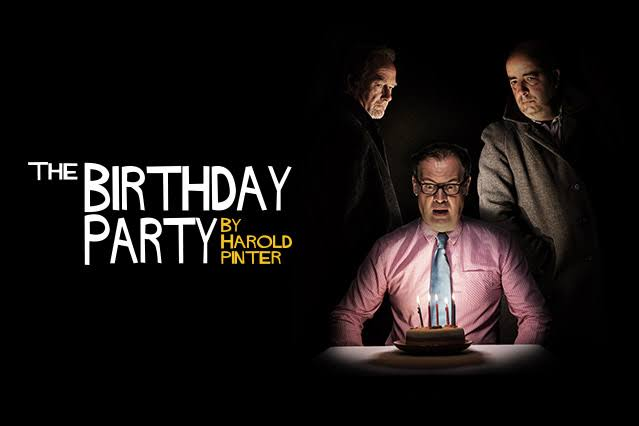
      So these are some important characteristics that one has to look at. Various post modern plays are written in this genre. Among them, the best example is Harold Pinter's 'The Birthday Party'. While looking for the characteristics of Comedy of Menace I have observed that The Birthday is at the top. So by this I personally come to the conclusion that the foremost work which can be identified as Comedy of Menace is The Birthday Party by Harold Pinter. At a point one can think that The Birthday party has become the synonym of the term Comedy of Menace. For this play and his most of the plays Harold Printer is being considered as one of the most influential figures in Comedy of Menace. There are other works also which can be categorised in this category. 


      • The Room (1957)
      • A Slight Ache (1961)
      • The Dumb Waiter (1960)
      • The Caretaker (1960)
      • Celebration (2000)


The Birthday Party as a Comedy of Menace 


           The Birthday Party was written in 1957 which is the first full-length play by Harold Pinter, first published in London by Encore Publishing in 1959. It is one of his best-known and most frequently performed plays.

         The Birthday Party is a comedy of menace. This is also Tragicomedy as it is a tragedy with a number of comic elements – as it is a comedy, which also produces an overwhelming tragic effect. Throughout the play we are being amused though at the same time we find ourselves at the brink of terror . There is a kind of terror and vague fear that keeps our nerves on an edge. Each and every time we feel uneasy. This happens even when we are laughing or smiling with amusement. So this kind of split quality gives this play a uniqueness. 


Let's sum up…

To conclude we can say that Comedy of Menace is such a play that presents laughter but at the same time a kind of fear and anxiety. So it remains a kind of tragedy not in a particular way but we can say disaster at the end.


I hope this blog will help you to have a better understanding of this term comedy of Menace.

Happy learning...

Thanks for visiting….


Words : 1215

Images: 3

Videos : 1


Monday, January 9, 2023

Tradition and the Individual Talent

 Thinking Activity

Tradition and the Individual Talent 

          This blog is written as a part of a thinking activity assigned by Dr. Dilip Barad sir, Department of English, MKBU on T. S. Eliot's essay Tradition and the Individual Talent. In this blog I am going to answer some of the questions given by sir with my point of views.


          'Tradition and the Individual Talent' s an essay written by a poet and literary critic T. S. Eliot. This essay was first published in The Egoist in 1919 and later on in Eliot's first book of criticism, "The Sacred Wood" (1920). The essay is also available in Eliot's "Selected Prose" and "Selected Essays". Tradition and the Individual Talent" is the well known works that Eliot produced in his critical capacity. It formulates Eliot's influential conception of the relationship between the poet and preceding literary traditions.

1. How would you like to explain Eliot's concept of Tradition? Do you agree with it?

       According to Eliot, tradition is that part of living culture inherited from the past functioning in the formulation of the present. It means a sense of continuity from the past. While talking about the concept of tradition there always lies a kind of tension of being between traditional and modern. So to understand Eliot's concept after edition it is important to know in which way he is talking about the tradition because whenever one hears a word tradition, one always thinks it of being traditional. Here he brings a word historical sense which involves a perception not only of the pastness of the past but of its presence. It means to write not nearly with the present time but also with the whole of the Literature. It is like connecting the dots or building the bridge between history and the present time. 

          He also justify that there is imitation of the past but that imitation should not be slavish. Hence there should be something like novelty in it which he describes in the individual talent. 

         For me it is very much difficult to either agree or disagree with the opinion of Eliot of tradition. At one point he says that that should be a sense of continuity of the past which he implies by the historical sense. Here he tries to criticise the romantic writer for cutting off thread from the tradition and initiated to write in a new way. But one can not say that there must be the historical sense of a poet to create something new. If we may believe in this idea, the new school of Romantic writers may fall in this test of the historical sense as they have individual talent on a large scale. So at this particular point one may disagree with it. But his description of the historical sense and the idea of the individual talent breaks the rigidity of the tradition as it believes not only in imitating the past but newness or Novelty in it. Here he perhaps wants to put a step further not only to be fitted in the box of the tradition.


2. What do you understand by Historical Sense? 

"The historical sense involves a perception, not only of the pastness of the past, but of its presence"

        According to idiot tradition is that part of living culture inherited from the past and functioning in the formation of the present. India represents that historical sense is the idea of the presence of the past. So our past always influences our present in each and every aspect. This concept becomes essential for depersonalization. He further says that,

          This historical sense, which is a sense of the timeless as well as of the temporal and of the timeless and of the temporal together, is what makes a writer traditional. 

        So this historical sense is timeless- has no bound and temporal(secular) also and the combination of both makes the writer traditional.

3. What is the relationship between “tradition” and “the individual talent,” according to the poet T. S. Eliot?

     While talking about the tradition, Eliot gives the word 'individual talent' to differentiate the talent of a poet. First he describes how historical sense is required but to give the perfect shape to that historical sense in a modern perspective the individual talent becomes much more important which can't be neglected. Only historical sense is not enough to write any literary work. For that the one and only requirement is to be creative.


4. Explain: "Some can absorb knowledge, the more tardy must sweat for it. Shakespeare acquired more essential history from Plutarch than most men could from the whole British Museum".

        Eliot uses the line "some can absorb knowledge the more tardi must sweat for it." Initially he says that to become creative is not easy as it is said that,

"Great epoch of creativity doesn't come often."

        So to be a creator of literary art one must need wide reading. The writer should have vast reading and wide knowledge of every field of the past as well as of the present. But later on he says that some can absorb knowledge. So it can be possible that those who are not well read can write fruitfully as Shakespeare did. So he didn't go to university. In a nutshell idiot provides both the ways major as well as exceptional but why Reading has graped more space than absorbance.

5. Explain: "Honest criticism and sensitive appreciation is directed not upon the poet but upon the poetry"

        In his essay Tradition and the Individual Talent T. S. Eliot says that

"Honest criticism and sensitive appreciation is directed not upon the poet but upon the poetry"

            In this perspective we observe that many a times or we can say most of the times a critic always tries to criticise literary art by its artist not by the art itself. For example, If we choose a particular writer or a poet and his or her writing and put the poet or writer at the centre while doing observation or making critique on the literary art it is not the right way to do criticism or appreciation. Because we are considering a poet not his poetry, it will not give the real charm of the poetry itself. So to make an honest criticism or sensitive appreciation it is important to be directed upon a poetry not upon a poet.

6. How would you like to explain Eliot's theory of depersonalization? You can explain with the help of chemical reaction in presence of catalyst agent, Platinum.

        As per my understanding Eliot's theory of depersonalization makes a poet aloof from the poetry. For that he gives an example of the chemical reaction in making sulphuric acid. So let's try to understand the equation. 

                              Catalyst 

            SO₃ + H₂O —---------> H₂SO₄

                              Platinum 

           So in the process of making Sulphuric acid, shreds of platinum play a vital role. Without using platinum this chemical reaction will not happen. So like this as Eliot says that while creating poetry(literary art) the poet plays the role of Catalyst like platinum. The way catalyst agent Platinum is not found in H2SO4, similarly, the poet should not be present in the poetry. 

7. Explain: " Poetry is not a turning loose of emotion, but an escape from emotion; it is not the expression of personality, but an escape from personality."

     It means the personal emotions or experiences and the poet's life should not be reflected in the poetry. But we can find the same thing in Eliot's work, where he presents not directly his own experiences and relationships. So it is very much difficult for a poet to be aloof from his work. Though the theory of depersonalization gives universality means where personal experiences and emotions should neglected.


8. Write two points on which one can write critique on 'T.S. Eliot as a critic'.

         After observing this essay I came to the conclusion that there are some points which one can consider while thinking about T. S. Eliot as a critic, he sometimes confuses us about what he actually wants to say. Like, 

  • How the ideas of T. S. Eliot in Tradition and Individual Talent' are applicable in Modern literature?
  • Elaboration of the ideas of T. S. Eliot and can this be found in his own work?
  •  Do T. S. Eliot is faithful to his own concepts of creative work and critical analysis?

Go through this videos to have better understanding of all this concept of T. S. Eliot.


The Concept of Tradition:


Explanation of "Some can absorb knowledge, the more tardy must sweat for it":

The Chemical Reaction: The theory of Depersonalization:


Important aspects in a brief: Tradition and the Individual Talent'

Click here to visit my blog on Th Wate Land by T. S. Eliot

Thanks for visiting…


Words: 1450

Images: 1

Videos: 4


Sunday, January 8, 2023

Poems by Robert Frost

 Thinking Activity

Poems by Robert Frost

      This blog is written in response to the thinking activity assigned by Megha ma'am, department of English, MKBU on the poems of Robert Frost. In this blog I am going to discuss the poem 'Nothing Gold can Stay'. 


Robert Frost :-

         Robert Frost was an American poet. His full name was Robert Lee Frost. He was born on March 26, 1874 in San Francisco, California, U.S and died on January 29, 1963 in Boston, Massachusetts. His work was initially published in England before it was published in the United States. He is Known for his realistic depictions of rural life and his command of American colloquial speech. Frost frequently wrote about settings from rural life in New England in the early 20th century, using them to examine complex social and philosophical themes. 

        Frost is the only poet who received four Pulitzer Prizes for Poetry. He became one of America's rare "public literary figures, almost an artistic institution". He was awarded the Congressional Gold Medal in 1960 for his poetic works. On July 22, 1961, Frost was named poet laureate of Vermont. His major works are,

  • A Boy's Will
  • North of Boston
  • New Hampshire

His major poems are,

  • Stopping by Woods on a Snowy Evening
  • The Road not Taken
  • Fire and Ice
  • Breaches
  • Mending Walls


Nothing Gold can Stay 

            'Nothing Gold Can Stay' is a short poem by Robert Frost, written in 1923 and published in The Yale Review in October of that year. It was later published in the collection New Hampshire in 1923 which earned Frost the 1924 Pulitzer Prize for Poetry. Frost is well-known for using depictions of rural life to explore wider social and philosophical themes. "Nothing Gold Can Stay' was written when Frost was 48. For most of his life, Frost lived in the idyllic New England region of the U.S., and he enjoyed incorporating nature themes and motifs into his writing. He uses the metaphor of spring's ending to examine the transience of youth, beauty, and ultimately life itsi. It contains ten lines. The central idea of the poem is 'immortality'. Nothing can last forever.


Nature’s first green is gold,

Her hardest hue to hold.

Her early leaf’s a flower;

But only so an hour.

Then leaf subsides to leaf.

So Eden sank to grief,

So dawn goes down to day.

Nothing gold can stay.


Analysis:- 

         The poem ‘Nothing Gold Can Stay’ begins with a simple statement. It refers to spring when he says 'Nature’s first green’. But immediately he uses the word 'Gold'. It gives a reference to Autumn which faded the beauty of Nature. The soft beauty of spring soon fades to summer and beyond. In the second line 'Her” refers to nature. The “hue” of nature is “green” as described in the first line. The second explains that the green of spring cannot last. In summer it will be dry and thus brown. In autumn, the leaves wither, change colours, and fall to earth. In the other perspective, in winter, life is buried under a sea of white so it is impossible to keep a plant green forever. So in a way it is hard to hold this greenery forever.

      This line of ‘Nothing Gold Can Stay’ is both a statement of fact and a metaphor. Obviously, in spring the trees will bud and flower before growing back their leaves. In that, literal, respect, the statement is completely accurate. Metaphorically, the writer says that the earliest leaves are as beautiful as a flower. In other words, spring itself is as lovely as a flower. After that what the poet says in the fourth line becomes more important. 

         "But only so an hour."

      It depicts that in springtime everything in nature blossoms lasts more than a mere hour. Metaphorically, it suggests that the early stage of beauty endures for such a brief and fleeting time that it could seem like it only really lasts for a moment. 

      After admitting that beauty lasts only for a while, the poet says that the blossoms of spring are replaceable. In each and every element nature adheres to a strict pattern. 

Then leaf subsides to leaf.

       First Plants sprout - bud - grow - wither - die. This is a kind of a cycle. Each part of the cycle brings a new aesthetic that is both new and familiar, different, and the same. In the sixth line, the poet recalls the biblical Garden of Eden to further illustrate his point. As nature slowly progresses from spring to winter, so did Eden go from the cradle of humanity to a place in distant memory.

So dawn goes down to day.

        The inevitability of decay is emphasised in the last couplet. Frost says that sunrise is only a temporary, limited time. All things must also be as limited. In the final line, the poet drives home his point. “Gold” is a symbol for all things beautiful, important, and valued. 

Nothing gold can stay.

      Here, the poet brings the word ''Gold" which he has used in the very first line. After observing the first and last line, we can feel the paradox between these two lines. Nature's first green is Gold and the last colour is also gold. He believes that this is true of all things found in nature. Trees, streams, oceans, mountains, and even the sun and stars: nothing is constant. All things change. All things fade to nothing. 


Literary devices:-

     The poem is divided into 4 couplets and 8 lines which means each of the two lines end in the same rhyme scheme - AA, BB, CC, DD. The poem follows an iambic trimester, is a type of meter having three iambs per line. 


Metaphor 

A metaphor is a direct comparison of two things that aren't alike. The first line of the poem compares new life to something extremely valuable:

'Nature's first green is gold'.


Personification:- 

Personification gives human qualities to inanimate objects. In the second line of the poem, nature is viewed as trying to hold on to her colors. 'Her' to s also used to personify nature.

'Her hardest hue to hold,'

The final line of the poem combines both metaphor and personification.

"Nothing gold can stay."


Hyperbole 

Hyperbole is a kind of exaggeration to prove a point. The fourth line in the poem exaggerates how fleeting life stages are with hyperbole, suggesting that a plant only flowers for an hour. Here for an hour is used to describe short earthly life.

'But only so an hour


Allusion:-

Allusion is mentioning something from a historical event or a piece of literature that contains meaning that isn't spelled out for the reader. In this poem Frost uses the allusion of the Biblical Garden of Eden.

'So Eden sank to grief'


Alliteration:

 Alliteration is the repetition of sounds in the same line, such as the sound of /d/ in “So dawn goes down to day”.

Conclusion:-

      In a nutshell, in this poem Frost presents the idea of immortality. Nothing can last forever. The one that has grown or born must decay or die one day and there is no exception. It can be Nature or animal or man all shall come to the end at once. This short poem provides the widest and the biggest truth of the universe which ch is inevitable.

Thanks for visiting...


Words: 1221

Images: 3

Videos: 2


Tuesday, January 3, 2023

Trends and Movements

 Thinking Activity

Trends and movements

          This blog is written as a part of the thinking activity assigned by Yesha ma'am on the Trends and Movements in Literary and other art form. In this blog I am going to discuss Surrealism, Dadaism and Expressionism with the insight of the classroom activities and these three creative arts created by me and I will also try to analyse and explain each of the arts created by me.

Surrealism:-

        Surrealism is a movement of art and literature which was founded by the poet and critic Andre Breton in 19224. It became popular in 1920s ad lasted till 1940s. Andre Breton published the "Manifesto of Surrealism" in 1924 where he has explained this new movement in detail. It was a movement which was mainly inspired by the phycho-analytical theories by Sigmund Freud.

Click here to visit my blog on surrealism 

Surreal Photography:-


 My Surreal drawings:-


This drawing is drawn by me in the classroom which was a task given by ma'am. This particular image is not based on my idea rather I have taken this image from the internet.


           This is a picture drawn by me where I have merged many things together to make the images meaningful. So, i will describe it step by step. First I have taken images of tea cup that we consume everyday. I have compared tea with our day to day lives and with the pouring tea out of a cup symbolises flow of our day to day lives. I have drawn images of a watch on a floating biscuit in the flaw of tea which symbolises that time is moving fast everyday. With the scene I have put an image of an upside down tower on which a man is standing and holding a time biscuit. Like we sometimes think that may time will stop at someplace or other interpretation can be seen that time may move slowly which gives us space to do a lot of things together.
              On the upper side I have exhausted the sun. The sun is also exhausted by its daily walk from east to west. We as human beings often feel such exhaustion because we do only one thing everyday. Our life has become mechanical which moves only in a single direction. On the down side you can see an image of goggles out of which eyes are looking at the outer scenario. This symbolises that on one hand some people try to manage their work with time whereas other people let time flow by simply looking at it and doing nothing. They are always on leisure, never on work. They don't have any concern about what is happening around them. 

        So this is what I have put in this drawing.

Dadaism :- 

Click here to visit my blog on Dadaism

             Dadaism was a movment of young artists and writers in Peris during and after first world war. It aimed at suppressing relationship between ideas and statement. An absolute freedom held meeting at bar and theatres and delivered itself of numerous non-sensical and semi-nonsensical manifestos. It was meant to signify everything and nothing. It became popular in Peris immediately after the first world war. Nothing was the basic word in vocabulary of Dadaism. 

           In art and literature manifestos of this esthetic were mostly collage effects. The arrangement of unrelated objects and word in a random fashion. Dada artists felt the war called into question every aspect of a society capable of starting and then prolonging it- including its art. Their aim was to destroy traditional values in art and to creat a new art to replace the old. It was opposed to form an order.  

        The word Dada is accidentally discovered by Hugo Ball that mean is wooden horse. Dadaism was founded in ZURICH in 1960 by Tristan Tsara - chef spokesman and theoretician with about the object of poverty and demolishing the tenets of art, philosophy and logic and substituting them with conscious madness as protest against madness of war.

My work on Dadaism:-

As a part of creating any Dada art I have selected to create a Dada poem, which is generally created out of newspaper clippings and other words, where we have to select random words unknowingly. So I have used newspaper Clippings. My poem contains ten lines.


Dada poem:-

Almost mind message from our positivity

Is tomorrow the emotions see how

Sacred the mountain world quickly

I in transform beyond light going

Of a Same will which 

We year common the people have

Around more there are the remembering world

The faction about taken home

Understand the tree to speaking up

You toward moon ever.

Let's try to interpret this poem..

Our mind always gives a message to be positive as we always have problems and confusions.. In the second and third line this positivity is enhanced as it says that emotions are like a sacred mountain world though it is static but it gives so many emotions together. 

       In the letter three lines I can be interpreted as a speaker who tries to convey that everything is going the same. We all have a similar year or time but how we are getting transformation in our own personality is very much important.

       The last four lines give the essence of the upper six lines. We have so many people around us who are constantly watching us or remembering everything(our transformation also). Here, in the eighth line the word fiction can be interpreted for things which are described in previous lines about remembering habits of the world. And we take all this thing at our 'home' means in 'our mind'. But on the other hand in this scenario to interpret last second line is a bit difficult where it said that we have to understand the tree - here tree and fraction can be categorised in a single category which is used as a metaphor for collectivity of the people- and try to speak up of the misconception of the world and continue to have changes within oneself which can lead you towards the moon means towards peace and satisfaction forever.

Central idea:-

       Dadaism is a kind of Destructive art where we collage various things together. Though this poem is not based on a particular idea as it was created with random words, we can get a Central idea of the poet by simply looking at it. 

       As per my interpretation of my own poem the Central idea or theme is to be possible in each and every aspect of our life. We come across so many perspectives of people it can be good or sometimes disturbing. So we have to come up with our own voice, our own perspectives and let others know what other think. Sometimes we have to just ignore them. So both of these ways lead you toward happiness forever.


Expressionism:-


          Expressionism is a modernist movement, initially in poetry and painting, originating in Northern Europe around the beginning of the 20th century. Expressionism developed as an Avant Garde style - started before World war I (1914-1918). Later the movement was attributed to literature, theatre, dance, film, music, etc.

         The main aim of expressionism is to express inner world subjectivity, emotions rather than the external world and the physical reality. The term refers to an "artistic style in which the artist seeks to depict not objective reality but rather the subjective emotions and responses that objects and events arouse within a person". Expressionism is the tendency of an artist to distort reality for an emotional effect. This term refers to imitating reproducing or repeating existence. 

Classwork on Expressionism:-


My work - Mountains and water coming down

           This is the painting created by sem 2 students on the Viewboard with the help of various colours including ma'am. I have drawn an image of a mountain from which the flow of water is coming down. I have drawn this with the above drawn image of expression and with the front image of a person which i have interpreted as a person in whose mind so many things going together. We all have our own flow of emotions and expressions which arise out of various thought processes. As the flow of a river ultimately meets the Ocean our emotions and expressions meet ultimately to our thoughts and by deep thinking we many a time come to the conclusion why we are thinking of any particular thing or topic and flow of thinking. Here the image of the river is symbolised with the flow of our thoughts.

          I hope by this explanation you will be able to get what as an artist I want to convey. You can have your other interpretations also. And if you have other interpretations, do write in the comment section and let me know how you get the thing out of these three arts.

Click here to visit my blog on Stream of Consciousness

Click here to visit my blog on Theatre of Absurd 

Thanks for visiting...

{Words:- 1487

Images:- 6

Videos:- 1}


Sunday, January 1, 2023

NSS Annual Camp 2022- Samaldas Arts College, Bhavnagar


તા. ૦૮-૦૧-૨૦૨૨

               2 જાન્યુઆરી, 2022 ના રોજ શામળદાસ આર્ટ્સ કોલેજના NSS યુનિટ દ્વારા આયોજિત વાર્ષિક શિબિરની શરૂઆત ગ્રામ દક્ષિણામૂર્તિ લોકશાળા, મણાર મુકામે થઈ હતી. કોલેજના ૧૦૦ ચુનીંદા વિદ્યાર્થીઓ સ્વયંસેવક તરીકે આ કેમ્પમાં જોડાયા હતા. આ સાત દિવસીય વાર્ષિક શિબિર નું મુખ્ય સ્થળ જ અત્યંત ઉત્કૃષ્ટ હતું, કે જે નાનપણથી જ વિદ્યાર્થીઓને સ્વાવલંબન ના પાઠ શીખવે છે અને ગ્રામ્ય જીવનને ઉજાગર કરવામાં મહત્વનું યોગદાન આપે છે.

                ઉદઘાટન સમારોહ થી લઈને સમાપન સમારોહ સુધી દરરોજના બૌદ્ધિક સત્રમાં અમે ઘણા બધા વક્તાઓને માણ્યા. જેમાં જાણીતા શિક્ષણવિદ્ ડૉ. મનહરભાઈ ઠાકરે "ગ્રામોદ્ધાર વિના રાષ્ટ્રોધ્ધર નહી" એવા નવા પણ પુરાના વિષયને ધ્યાનમાં લઇ ગ્રામ અભિમુખતા માટે માર્મિક ટકોર કરી. ડૉ.અરુણભાઈ દવેએ તાજેતરમાં ધડાયેલ શિક્ષણ નીતિમાં લોક શિક્ષણના સ્થાન વિશે ની વાત "કમ્પ્યુટર અને કોદાળી ના સમન્વયથી કેળવણી"ના દ્રષ્ટાંત સાથે રજુ કરી. ગ્રામદક્ષિણામૂર્તિ લોકશાળામાં દાદા તરીકે ઓળખાતા સંચાલક શ્રી સુરસંગભાઈ ચૌહાણે નવી નવી રમતો ના માધ્યમથી એકતા અને અખંડિતતાના પાઠ શીખવ્યા. અહીંના જ શિક્ષિકાબહેન શ્રી કંચનબેને "વિચારો વિશ્વની માટે અને આચરો ગામના ગોંદરે" વિષય દ્વારા અમારામાં ગ્રામવિકાસની જ્યોત જગાડી. આ ઉપરાંત કોલેજના ભૂતપૂર્વ વિદ્યાર્થીઓ, આજુબાજુના ગામના અગ્રણીઓ તેમજ અમારી જ કોલેજના અધ્યાપકો સમયાંતરે અમારા ઉત્સાહમાં વધારો કરવા અમારી મુલાકાતે આવ્યા અને પોતાના વિચારો રજુ કર્યા.

                  આ સાત દિવસ દરમ્યાન અમે નરાના બુલંદ અવાજ સાથે સોસિયા અને અલંગ ગામ માં પ્રભાતફેરી, ગ્રામ સફાઈ જેવા કાર્યો કર્યા. ઘરે ઘરે જઈ લોકોની મુલાકાત લીધી લોકોની સમસ્યાઓ, રહેણીકરણી અને એમના ગ્રામ્ય જીવન વિશેના ખ્યાલો ની ઝાંખી લીધી. આ મહાયજ્ઞમાં શિક્ષણ, સ્વાસ્થ્ય, કોરોના રસીકરણ, ગ્રામ્ય જીવન જેવા વિષયોને સાંકળીને જનજાગૃતિ ફેલાવવાના કાર્યો કર્યા.

                    શામળદાસ કોલેજના લગભગ 70 ટકા વિદ્યાર્થીઓ ગામડામાંથી આવે છે. આથી બાગાયતી કૃષિ વિકાસ સંશોધન ક્ષેત્રની મુલાકાત અમારી શિબિરનો પ્રાણરૂપ હિસ્સો કહી શકાય. મુલાકાત દરમિયાન સવારે આ કેન્દ્રના સ્થાપક અને મુખ્ય સંશોધક ડૉ. વિરેન્દ્રસિંહ સાહેબે પ્રોજેક્ટર દ્વારા મણારની બંજર ભૂમિ પર આવું વિખ્યાત કેન્દ્ર કઈ રીતે ઉભુ કર્યું એની તથા કેન્દ્રની વિવિધતાના દર્શન કરાવ્યા. તે માટે "Hard work and Strong determination" પર ભાર મૂક્યો. અહીં ખેડૂતોને વિવિધ પ્રકારના પાકો તથા કાચા માલમાંથી પાકો માલ બનાવી બજારમાં નિકાસ કરવાની તાલીમ અપાય છે. ભાવુબેને ગૃહ ઉદ્યોગ અને સખીમંડળ દ્વારા સ્ત્રી સશક્તિકરણની વાત કરી. બપોર પછી વિવિધ પ્રયોગશાળા તથા સમગ્ર સંશોધન ક્ષેત્રની મુલાકાત લીધી, જેમાં વિરેન્દ્રસિંહ સાહેબે કરેલી વાતના તમામ દ્રષ્ટાંતો જોવા મળ્યા.

                  શિબિર દરમ્યાન અમે વિશ્વના સૌથી મોટા શિપ બ્રેકિંગ યાર્ડ અલંગની પણ મુલાકાત લીધી, જેમાં સૌપ્રથમ સૌપ્રથમ ટ્રેનિંગ સેન્ટરમાં યાર્ડ વિશે અને અહીંના વર્કરો વિશેની માહિતી લીધી. ત્યારબાદ વિવિધ શિપ બ્રેકિંગ પ્લોટ માં જઈને પ્રત્યક્ષ માહિતી મેળવી જે ખરેખર અદ્વિતીય છે. 


                ગ્રામ દક્ષિણામૂર્તિ લોકશાળા ની વાડીમાં વિહાર કરી પ્રકૃતિમય વાતાવરણમાં અંતાક્ષરીના ગીતો દ્વારા સંગીતના સૂરો રેલાવ્યા. વાડીમાં પાકેલા ચીકુ અને નાળિયેર પાણીની પણ મજા માણી. ખરેખર એ પ્રકૃતિમય વાતાવરણમાં વિહાર કરવાની મજા જ કંઈક અલગ હતી.

               સમગ્ર કેમ્પ દરમિયાન અમારી કોલેજના આચાર્યશ્રી ડૉ. જે. બી. ગોહિલ સાહેબે અમારી સાથે સાત દિવસ રહી, અમારા ઉત્સાહમાં વધારો કર્યો હતો. આ કેમ્પના પ્રાણરૂપ અમારા ચારેય પ્રોગ્રામ ઓફીસરશ્રીઓ, ડૉ. જનકભાઈ જોષી સાહેબ, ડૉ. એ. આર. નાયક સાહેબ, પ્રા. એસ. એમ. રાવત સાહેબ તથા ડૉ. સંગીતાબેન માહલાએ માર્ગદર્શક તરીકેની ભૂમિકા તો અદા કરી જ પણ, સાથો સાથ અમારા માતા પિતા તરીકેની ભૂમિકા પણ અદા કરી, જેને કારણે અમે ઘરથી દૂર છીએ એવું અમને જરા પણ ન લાગ્યું, અને અમને જીવનના પાઠ પણ શીખવ્યા.

               શિબિરની અંતિમ રાત્રે ભવ્ય લોકડાયરાનું આયોજન થયું હતું જેમાં બાબુભાઈ બારોટ, હર્ષાબેન બારોટ તથા અમારી જ કોલેજના અધ્યાપક શ્રી કેવલભાઈ ગોહેલ ઉપસ્થિત હતા. તેમના સંગીતના તાલે અમારી સાથે સમગ્ર વાતાવરણ પણ હિલોળે ચડયું હોય તેમ લાગતું હતું. આ દિવસે અમારા જોષી સાહેબ નો જન્મ દિવસ પણ હતો, જે અમારા માટે એક યાદગાર ક્ષણ બની ગઈ છે. સાહેબની આંખમાંથી સરતા ખુશીના આંસુએ તમામને ભાવ-વિભોર કરી દીધા હતા, કારણ તમામને એકમેક પ્રત્યે ખુબ જ લાગણી બંધાઈ ગઈ હતી.

             દરરોજ રાત્રી સત્રમાં વિદ્યાર્થીઓ દ્વારા દરરોજના કાર્ય નો અહેવાલ રજૂ કરવામાં આવતો. આ ઉપરાંત આગલા દિવસના કામની સોંપણી કરવામાં આવતી. આ સત્રમાં ગાયન-વાદન નું કાર્ય પણ થતું, જેમાં વિદ્યાર્થીઓને પોતાની કલા ખીલવવાનો એક સુવર્ણ અવસર મળતો, અને આખા દિવસનો થાક પણ ઉતરી જતો.

                  શિબિરમાં રહેવા-જમવાની વ્યવસ્થા ખૂબ જ સારી હતી. શિબિર દરમ્યાન તમામ વિદ્યાર્થીઓને "વીણેલાં મોતી" નામનું પુસ્તક, અમારી કોલેજના સમાજશાસ્ત્ર વિભાગના અધ્યક્ષશ્રી ડૉ. અનિલભાઈ વાઘેલા સાહેબે બેગ, પેન તથા કોન્ફરન્સ પેડ તેમજ દાઠાવાલા બ્રધર્સ તરફથી ટીશર્ટ નું વિતરણ કરી તમામ વિદ્યાર્થીઓને પ્રોત્સાહિત કરવામાં આવ્યા હતા. અનુદાતા શૈલબાપા તથા અમિતભાઈ પડિયા એ પણ કાર્યક્રમમાં ઉપસ્થિતિ આપી હતી.

                   2 જાન્યુઆરી, 2022, આ તારીખમાં ઝાઝા બગડા જ આવે છે. આ દિવસે અમારી ઐતિહાસિક કોલેજ નો જન્મદિવસ પણ હતો. આથી શિબિરની શરૂઆત અને કોલેજના જન્મદિવસની ઉજવણી, એવી બે ગણી ખુશીથી શરૂ થયેલી આ શિબિર અનેક ગણી ખુશી અને ખાસ વાસ્તવિકતાલક્ષી શિક્ષણ-કેળવણીથી પૂરી થઈ. શિબિર ભલે પૂરી થઈ ગઈ પણ તે દ્વારા મળેલ ખુશી અને શીખ જીવનપર્યંત યાદ રહેશે.

                     આ સાત દિવસ મારા માટે અતિ અવિસ્મરણીય છે. એનું કારણ એ છે કે મને આ કેમ્પનું નેતૃત્વ કરવાનો મોકો મળ્યો હતો., જેને મને સામૂહિક એકતા અને નેતૃત્વના પાઠ શીખવ્યા છે અને સાથોસાથ મારા જીવનને પણ ધરમૂળથી પરિવર્તન કર્યું છે. અમારા આચાર્ય શ્રી અને ચારેય પ્રોગ્રામ ઓફીસરશ્રીઓના માર્ગદર્શન અને સાથી મિત્રોના સાથથી મને નેતૃત્વ કર્યાનો ખૂબ જ આનંદ થાય છે, જેની સફળતાને યાદ કરું તો મન ગદગદિત થઈ જાય છે.

                     ખરેખર, આ સાત દિવસીય શિબિરે અમારા સૌના જીવનમાં મેઘ ધનુષ્ય ની જેમ સાત રંગો પુર્યા છે, એ દિવસો અમારા સૌ માટે અવિસ્મરણિય બની ચૂક્યા છે.

By Trushali Shantibhai Dodiya

Semester 6

Main subject: English

Date:- 27  January, 2022

              This blog was written on my another blog account but I am Publishing it again in new account as a part of recollection of old but golden memories. Click here to visit previous blog on the same camp.

Thanks for visiting...


Expert Lecture Review

 Expert Lecture On Economics by Hemilton Mahida Ajit Bhil-  https://ajitbhil.blogspot.com/2026/02/review-writing.html?m=1     Sagar Rathva- ...