Sunday, July 2, 2023

Raat Rani

     Raat Rani

This blog is written in response to the thinking activity to understand Independence through the lens of the first episode of the web series 'Modern Love Mumbai' , "Raat Rani" assigned by Vaidehi ma'am, department of English, MKBU. 

As a part of studying post-independent Indian English literature, Vaidehi madam came up with the discussion that before understanding post independence literature, it is essential to understand the meaning of independence. Ma’am passed us a question: what is the meaning of independence according to us? So we all first came up with numerous ways of looking at independence, like Gender based freedom, different perspectives in terms of independence which varies from one person to other and even within there is always a changing state of the ideas of Independence. Many times it may be possible that  Liberty or independence turns to licentiousness. But the concept of independence always varies from individual as well as mass. This discussion brought us so many insights of what individuals think about independence. 


            To enhance our understanding of independence, Vaidehi madam organised a screening of the first season of the web series titled 'Modern Love Mumbai' “Rat Rani” Which also talks about the same. This episode is the story of Lali, a cook and her husband Lutfi, a Security Guard. It has that notion of what is independence of a woman as well as a person. 


Director - Shonali Bose

Writers - John Belanger, Devika Bhagat, Nilesh Maniyar

Stars - Fatima Sana Shaikh, Bhupendra Jadawat, Dilip Prabhavalkar


Generally I have found some of the frames and symbols which directly indicate dominance as well as patriarchy which has been cherished when the central female character crosses the over bridge by bicycle. Over bridge is the symbol that comes up many times. As per my interpretation, the bridge is the height and a kind of dominance that at first seems quite impossible to cross and when she does it, she feels like she has done the task which was the toughest one and this can be related to her married life as well. Now let’s discuss some questions raised by ma'am and try to justify it.


List down the contradictory symbols you observed in the episode “Raat Rani”.


In 'Rata Rani' there are some symbols which are quite contradictory. Let’s understand all these symbols through the frames of the episode:
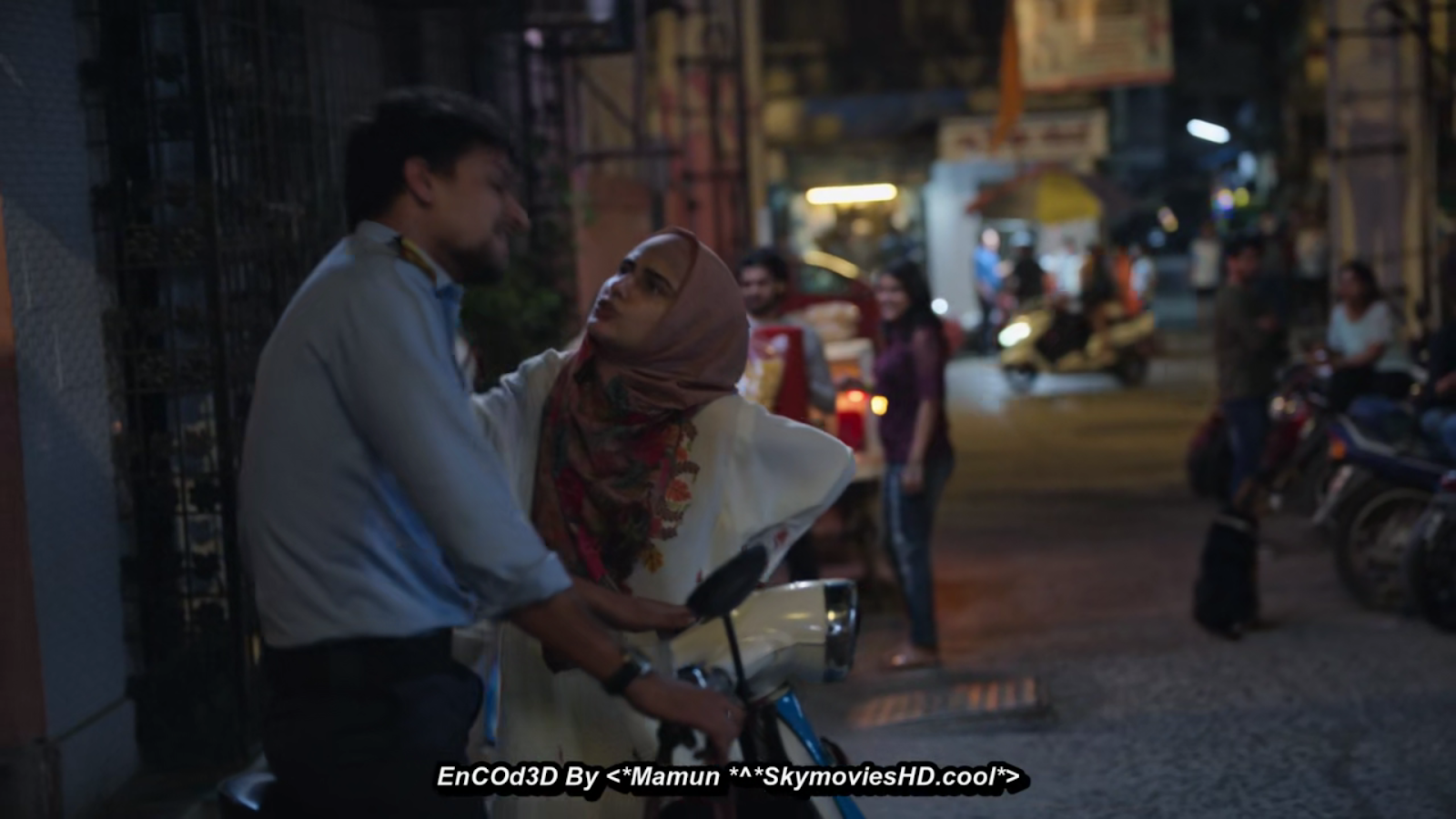
In the initial frame, we witness a contradictory state of society. Lali, a woman, is depicted as dominating her husband, Lutfi.

 Ice-cream:-

In this frame, Lali is shown breaking up with her husband. However, the symbol of love, the Taj Mahal, is set behind them. This contrast raises questions about why these two opposing elements are placed together. Now lets take another contradictory symbol from the same frame but adding another one.


In the first scene, we discover a significant change in Lali's behavior. Previously, she had a habit of sharing ice cream with her husband,like two spoons and one cup. However, in the first frame, we witness a notable shift in Lali's actions as she indulges in ice cream alone, without extending the customary invitation to her husband. This transformation in Lali's behavior signifies a profound shift in her character.  Now Let’s take three other frames to support this  argument.
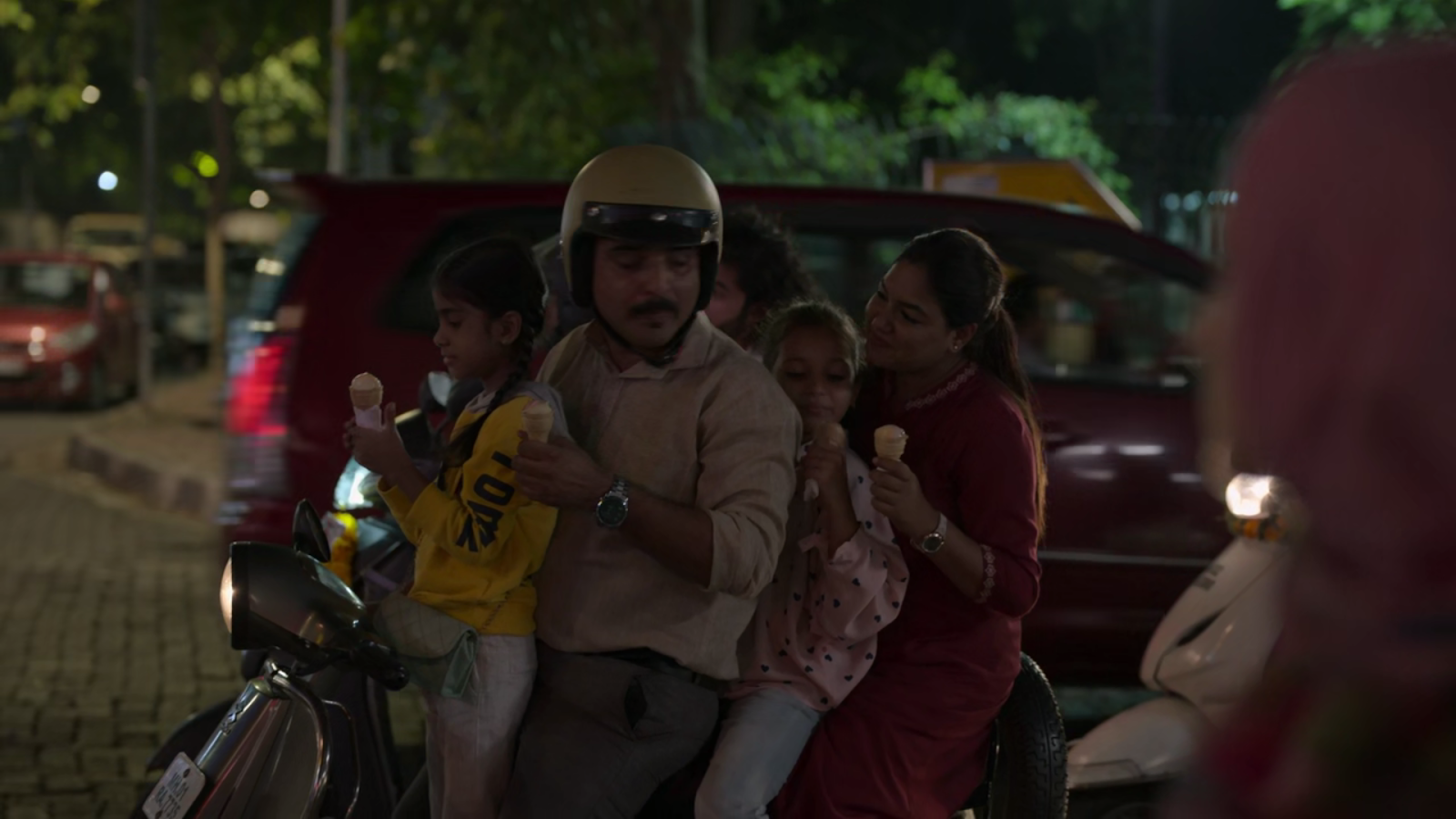

Following Lutfi's departure, Lali experiences a profound sense of longing and misses him deeply. This sentiment becomes evident when she observes a family enjoying ice cream together, triggering a poignant reminder of Lutfi's absence. . However, as Lali crosses the bridge and continues on her journey, a remarkable transformation takes place. She begins to relish the simple pleasure of eating ice cream alone, signifying a newfound ability to enjoy her own company and move beyond the longing for someone who is no longer a part of her life. This particular frame beautifully captures Lali's journey of self-discovery and the growth she undergoes along the way.
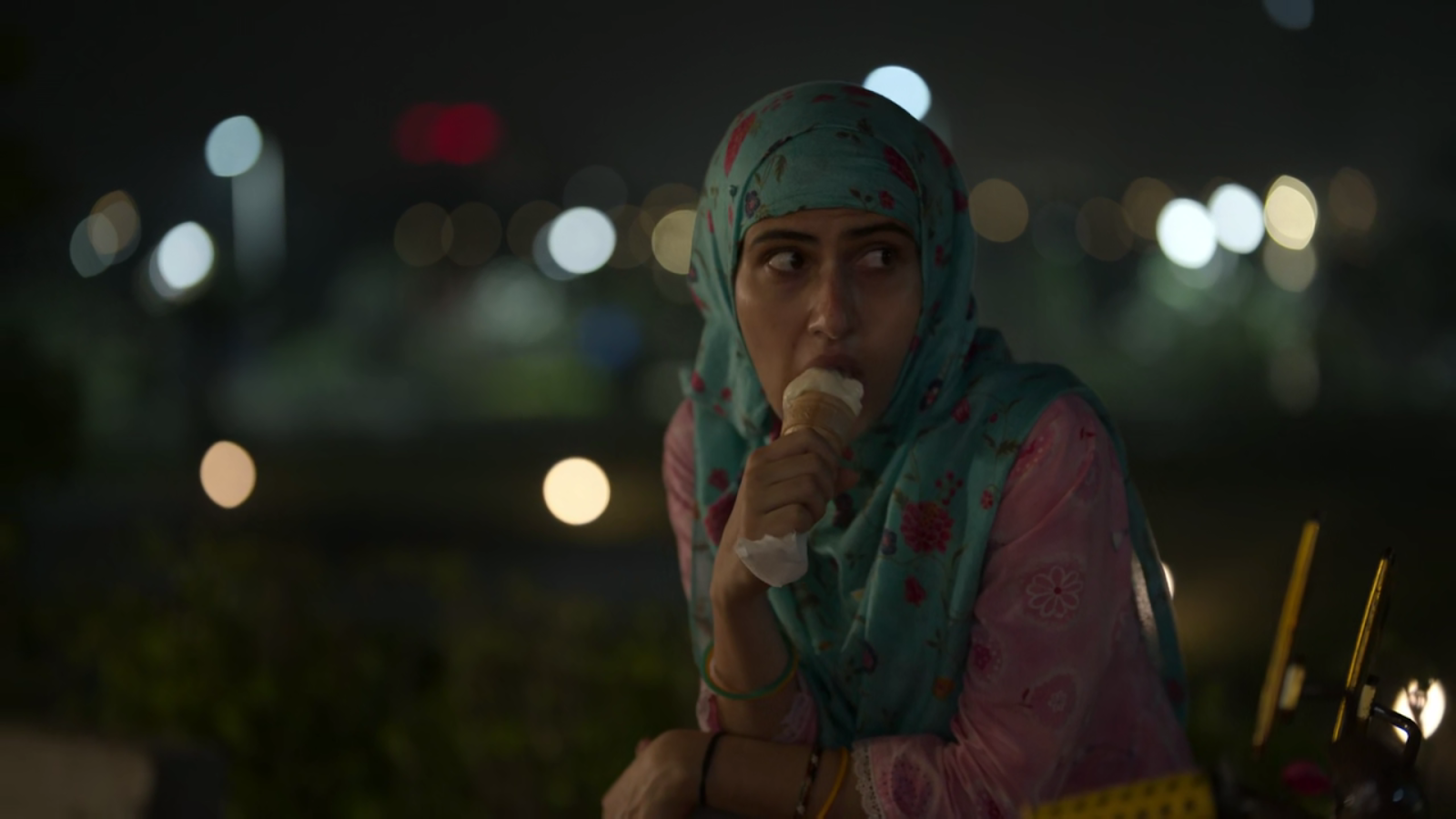

In the wake of her husband's departure, Lali embarks on a bold venture by starting her Raat Rani Kava business. This decision demonstrates her courage and determination, as she becomes the only woman among numerous men in the same industry. This choice symbolizes the inner strength Lali has gained through her experience of crossing the bridge. It signifies her ability to step out of her comfort zone, face challenges head-on, and defy societal expectations. Lali's decision to enter a male-dominated field showcases her resilience and willingness to break barriers, inspiring others with her fearlessness and determination.

 Broken Ceilings:-


In society, it is traditionally believed that it is a man's duty to take care of the home and provide shade ("Chhat") to the rest of the family. However, in this episode, Lali is the one who repairs the "Chhat" instead of her husband. This symbol challenges the notion that only men are capable of such tasks and suggests that women can also take charge.


Which is your favorite symbol from Raat Rani? Why?


 Flyover

The flyover is a prominent and meaningful symbol throughout the episode "Raat Rani," appearing frequently from the beginning to the end. It holds a special significance for Lali, representing her journey of courage and the breaking of societal stereotypes.


Lali finds inspiration and strength in the flyover, viewing it as a symbol of her own bravery. It becomes a metaphorical bridge that she must cross to overcome challenges and achieve personal growth. Despite her initial struggles, Lali perseveres, determined to conquer the flyover. When she finally succeeds, a sense of jubilation fills her heart, and she proudly shares her accomplishment with others, proclaiming that she has crossed the flyover.


The flyover represents much more than a physical bridge for Lali. It becomes a powerful symbol of her courage to find happiness and independence without relying on her husband. Towards the end of the episode, she firmly tells her husband not to return home, signaling her newfound strength and willingness to assert her own desires.


In essence, the flyover embodies Lali's transformation, her ability to break free from societal expectations, and her emergence as a strong, self-assured individual. It serves as a testament to her courage and resilience, symbolizing the liberation she finds by embracing her own happiness and forging her own path.


Which is your favorite frame from the episode? Why?


The whole episode is one of my favourite and thus all the frames since Lali’s struggle to her conquest. But if have to talk about one particular frame, than i will show the below one:
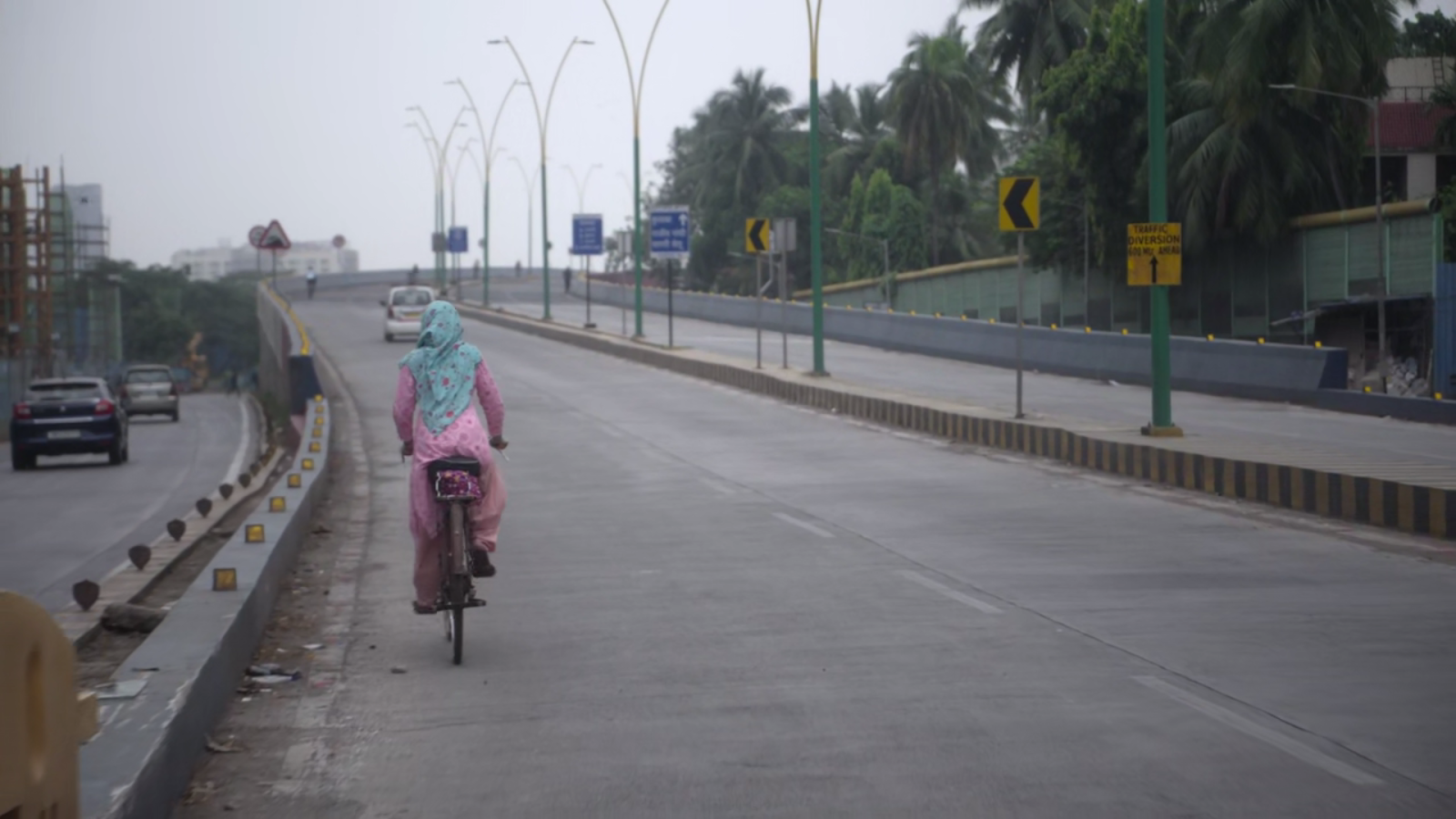

In our lives, we all encounter challenges and face suppression, especially as women. It is essential to continuously strive to overcome these obstacles. This notion deeply resonates with me and serves as a tremendous source of inspiration. Lali exemplifies this mindset as she courageously steps out of her comfort zone, determined to conquer the hurdles in her life. With unwavering courage, she fearlessly crosses the metaphorical flyover, ultimately realizing that she is capable of achieving anything she desires. Instead of dwelling on outcomes and succumbing to tears, it is vital to embrace courage as a driving force to overcome challenges. By doing so, we empower ourselves to triumph over any adversity that comes our way.


Compare and write a note on all the women characters from Raat Rani.

In the episode, each female character possesses distinct perspectives and approaches towards life and relationships, setting them apart from one another. Among them, Lali stands out as a unique individual.


When Lali enters the house where she is serving, she witnesses a quarrel between a man and a woman. The woman initially emphasizes the importance of her sleep, highlighting her personal needs. However, she later expresses her frustration, mentioning that she can no longer adhere to a strict diet and maintain her physique solely for her husband's sake. She then requests Lali to prepare something like Paratha, implying a desire for indulgence.

Another woman appears multiple times throughout the episode, observing Lali's actions without actively participating in the unfolding events.

Lali, on the other hand, stands apart from the other female characters due to her courage and determination. She possesses the strength to pursue her own desires and take action accordingly. Lali's choices and decisions reflect her ability to live life on her own terms, setting her apart from societal expectations and norms.


“Courage is Contagious” – Give an example for this from the episode


The entire episode of 'Raat Rani' revolves around the idea that "Courage is Contagious." Lali serves as an inspiration for others, encouraging them to face the difficulties in their lives with courage. After her husband abandons her, Lali encounters numerous challenges. The collapse of her home's ceiling presents the biggest hurdle, requiring her to find the funds and initiate repairs all on her own. Despite the absence of her husband, Lali manages to navigate through these obstacles.


As she crosses the flyover, a sense of accomplishment washes over Lali, signifying her triumph over the challenges she has faced. Empowered by her resilience, she embarks on a new business venture, selling Kava, becoming the only woman in a male-dominated industry. During a conversation with a lady she serves Kava to, Lali shares insights about the Raat Rani flower, which holds significance considering the episode's title.


रातरानी की महक से साप निकल आते है तो उसकी महक दबाने के लिए लोग बाजुमें एक और पेड़ लगा देते है ‘दिन का राजा’. अब दिन का राजा लगाओ या बेंड का बाजा बजाओ,  उससे रातरानी की खुश्बू तो काम नही होगी ना ?


And she shows her the flower of Ratrani. The flower of Ratrani and the life of Lali are altogether the same. When her husband left her, it doesn’t mean she will break down but she perseveres and continues to do remarkable work. 


Lali takes it upon herself to repair the broken ceilings of her home. In a pivotal moment, she confronts her husband and refuses to share ice cream with him, symbolizing a drastic change and her newfound courage. She ultimately breaks free from the relationship, symbolized by the statue of Liberty standing alongside Lali, representing her freedom.


As Lali crosses the flyover once again after the breakup, she utters powerful words:


Not Allowed!

Not Allowed! 

Two Wheeler Not Allowed!

Lalzari (Lali) colloge जाना Not Allowed!

रात को बाहर निकलना Not Allowed!

प्यार करना Not Allowed!

Law Cast की लड़की से प्यार करना तो बिल्कुल Not Allowed!

और जब उसने छोड़ दिया तो खुश रहना Not Allowed!

और क्या क्या Not Allowed है??!!!!


These words of Lali indicate that everything is not allowed but what we do is of more importance not what the societal rules says.


Share a picture of yours with a woman who is your source of courage. Give a creative title to it.
 

Wonder Women of My World


While it is asked to provide a title for a photograph featuring a woman who serves as my inspiration, I want to seize this opportunity to express my gratitude to two exceptional individuals who have played a pivotal role in shaping me. It is often said, "Behind every successful man, there is a woman," and I wholeheartedly affirm that my success and achievements, wherever I stand today, are a testament to the unwavering support and hard work of these two wonder women.


Their diligent efforts and unwavering belief in me have pushed me forward. They have been my pillars of strength, accompanying me on this journey and fueling my determination to strive for greater heights. Today, as I reflect on my accomplishments, I am overjoyed to acknowledge the profound impact these remarkable individuals have had on my life in the financial and emotional support.


To both of you, I extend my heartfelt love and appreciation. You have molded me into the person I am today, instilling in me the courage to face challenges head-on and inspiring me to reach for my dreams. Your unwavering presence and guidance have been instrumental in my growth, and I am forever indebted to you. Thank you for being my wonder women, standing by my side and helping me carve a path to success. Love you both…


Thanks for visiting..


Sunday, June 4, 2023

Two-day international Multidisciplinary Conference on the Representation of Violence in Literature and Media


Two-day international Multidisciplinary Conference on the Representation of Violence in Literature and Media


            On the 30th and 31st of May 2023, I had the privilege of attending several sessions at the two-day international Multidisciplinary Conference on the Representation of Violence in Literature and Media, organized by REVA University in Bengaluru, India. The event was held in collaboration with the School of Arts and Humanities at Liverpool John Moores University in Liverpool, England.


          During the conference, I had the opportunity to attend four captivating keynote sessions, which provided valuable insights and expanded my knowledge in various subject areas related to the representation of violence in literature and media.


            The first keynote speaker was Professor Bill Ashcroft, Emeritus Professor at the School of English, Media, and Performing Arts at the University of New South Wales in Sydney, Australia. His talk, titled "Conflict and Transformation," delved into the concepts of creativity, transformation, and conflict. Professor Ashcroft posed the question, "Will literature change the world?" and emphasized the power of creativity to generate hope and envision a different world  “Creativity generates hope. It gives us a vision to see the world differently. Creativity is the stepping beyond and possibility of a different world.”. Another question posed by Professor Ashcroft was, "Can hope be disappointed?" The answer provided was a resounding "Yes." While hope can indeed be disappointed, it remains indomitable, incapable of being completely destroyed. It is within the realm of literature that its true power to resist violence and portray the possibility of a transformed world is unleashed.


 Dr. Banibrata Mahanta, Professor at the Department of English at Banaras Hindu University in Varanasi, Uttar Pradesh, delivered an intriguing talk on "Disability & Violence." His presentation explored the representation of disabilities in literature and media. Dr. Mahanta highlighted the importance of recognizing that the understanding of disability is predominantly shaped by non-disabled individuals. He examined the religious associations attributed to disabilities, often linked to the concept of karma. To illustrate his points, Dr. Mahanta shared three examples: Dhritarashtra, a blind king whose blindness is attributed to the circumstances of his conception and a curse; the film "Guzaridh," featuring a disabled male protagonist; and the portrayal of disabilities in print media, particularly during the COVID-19 pandemic when attention was drawn to the experiences of disabled individuals.


           Ms. Alankrita Singh, a former IPS officer and researcher with experience in law enforcement in the United Kingdom, delivered a compelling talk on "Gender and Juvenile Justice." Her presentation shed light on gender-based violence and the challenges faced within the juvenile justice system. Drawing from her own professional experiences, she provided valuable insights into this critical issue.


            Dr. Rajkumar, Professor and Former Head of the Department of English at the University of Delhi, New Delhi, delivered a thought-provoking talk titled "Narrating Violence: A Reading of Dalit Novels." His keynote addressed the theme of untouchability, highlighting various examples to underscore the ongoing issue of caste-based violence in society. Despite the existence of the Dalit Atrocity Act, numerous atrocities against Dalits continue to be reported. Dr. Rajkumar outlined several contributing factors, including disparities between the literate and illiterate, the influence of karma theory, fear among the upper class, complexities within the legal system, and economic dependence. He also noted that legal procedures are often costly, time-consuming, and fail to deliver true justice. It is a widely held belief that the law primarily serves the interests of the upper class. Dr. Rajkumar emphasized the pervasive nature of caste in Indian life, permeating literature, culture, country, and even spirituality. “Cast is a fact of Indian Life” “In this country, the air that one breathes, water that one drinks is about cast…. Literature, Culture, Country, God, Devil all have cast”. He highlighted Kalyan Rao's novel, 'Untouchable Spring,' as a remarkable example of this issue.


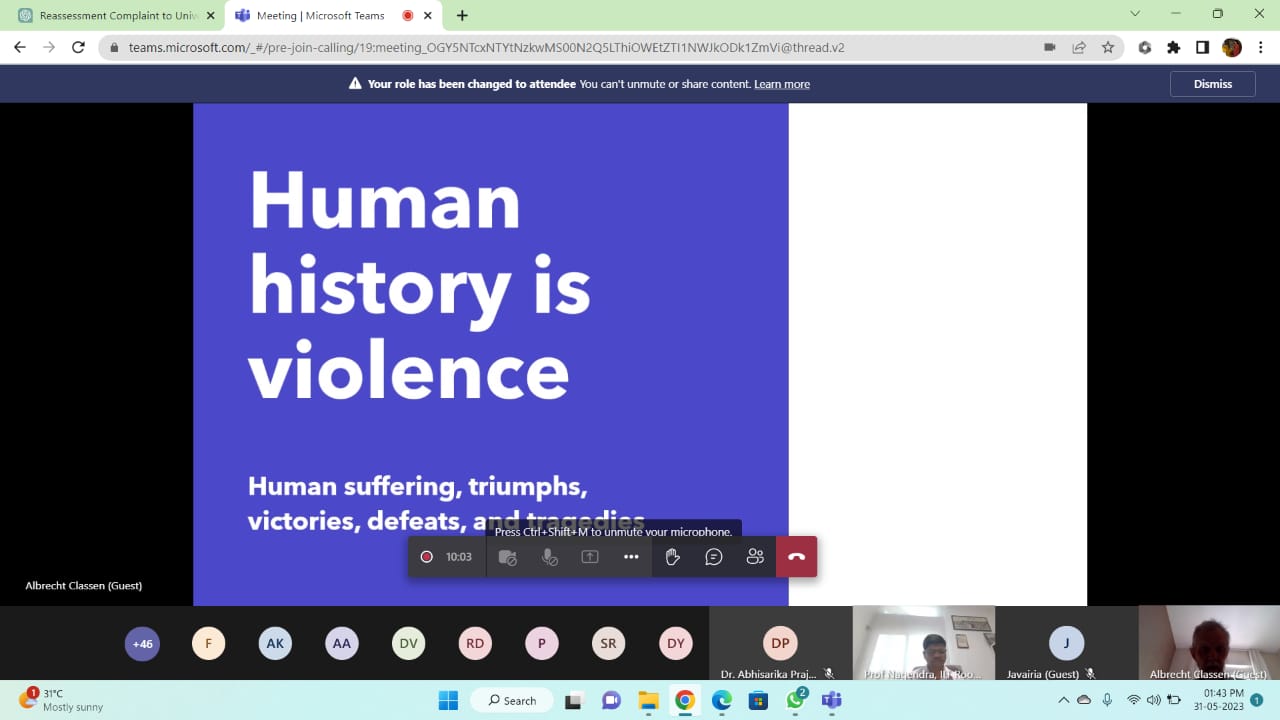
           The final keynote session was presented by Dr. Albrecht Classen, University Distinguished Professor, Grand Knight Commander of the Most Noble Order of the Three Lions (GKCL), and Director of Outreach at the University of Arizona, USA. His talk, titled "The Horrors of War and Violence as Reflected in Western Literature and Cinema. 


         This session proved to be immensely fruitful in terms of comprehending the spectrum of human experiences encompassing suffering, triumphs, victories, defeats, and tragedies. It underscored the profound reality that violence has been deeply entrenched within us throughout our enduring history. In essence, human history is intricately intertwined with the pervasive presence of violence.


              In a nutshell, the keynote sessions I had the privilege of attending have profoundly enriched my understanding and sparked a multitude of ideas within me. Each session was truly remarkable, captivating, and well worth the time and attention invested. I am immensely grateful to REVA University for affording me the opportunity to engage with these distinguished personalities from around the globe. My heartfelt appreciation goes out to the university for organizing such an exceptional event.


Thanks for visiting...

Monday, May 8, 2023

Book Review: The White Tiger by Arvind Adiga


      Dear Readers, I recently had the pleasure of reading "The White Tiger," a novel written by the Indian author Aravind Adiga. I found myself captivated by Adiga's exceptional narrative style, his masterful characterization, and his vivid depictions of Indian cultural norms. Without a doubt, this book is one of the finest works for cultural studies that I have come across.

          "The White Tiger" was published in 2008 and won the 40th Booker Prize that same year. Through a retrospective narration from Balram Halwai, a village boy, the novel provides a darkly humorous perspective on India's class struggle in a globalized world. Adiga examines issues such as the Hindu religion, caste, loyalty, corruption, and poverty in India.

        The novel has been widely praised, earning a spot on the New York Times bestseller list and winning the prestigious Booker Prize. Adiga, who was only 33 years old at the time, became the second youngest writer to win the prize and the fourth debut writer to do so. In his own words, Adiga's aim was "to catch the voice of the men you meet as you travel through India—the voice of the colossal underclass." He sought to capture the unspoken voice of people from "the Darkness"—the impoverished areas of rural India—without sentimentality or portraying them as mirthless, humorless, or weak.

Balram himself declares his story as “The Autobiography of a Half-baked Indian”


Major Characters:


Balram Halwai(Munna)- a Driver and an entrepreneur

Vikram Halwai- Father of Balram

Wen Jiabao

Kusum- Granny of Balram

Kishan- Cousin of Balram

Stork- Landowner- 

Mr. Ashok- Master of Balram and the Son of Stork

Pinky Madam- Wife of Mr. Ashok

Mukesh- Brother of Mr. Ashok

Dharam- Balram’s young cousin

Ram Persad- Number 1 Servant of Stork’s family 

Vitiligo-Lips: Driver of other businessman

Vijay- Balram’s personal hero Great Socialist

Bahadur- Another FAmily Servant of Stork’s Family, A kind of cruel man

        "The White Tiger" is a remarkable work that offers an insightful and thought-provoking commentary on India's social and economic issues. Adiga's writing style and his ability to bring his characters to life make this novel a must-read for anyone interested in exploring the complexities of Indian culture and society.

      Arvind Adiga's novel, "The White Tiger," portrays the Indian class struggle and cultural norms in a darkly humorous manner. The protagonist, Balram Halvai, recounts his journey from being a village boy to an entrepreneur who kills his master and flees with his money. He even assumes his master's name, Mr. Ashok, and shares his success story with Mr. Wen Jiabao, the former premier of China, who is visiting India to learn about successful Indian entrepreneurs.

“Mr. Jiabao is on a mission: he wants to know the truth about Bangalore”.

        Balram's letters to Mr. Jiabao drive the novel's narrative, making it an exemplary epistolary novel in the Indian tradition. The storytelling is non-linear, moving back and forth between past and present. Balram provides hints about the future, keeping readers engaged and curious. For instance, his mention of a poster he found in a train station in Hyderabad when he was travelling with only one red bag leaves readers wondering about the bag's contents and his reason for being in Bangalore.

“I found it in a train station in Hyderabad, in the period when I was travelling with no luggage - except for one very heavy red bag- and coming down from Delhi to Bangalore.”

The poster's significance is revealed towards the end of the novel when Balram becomes a wanted man for a crime he committed. As it described in the poster,


“ASSISTANT SOUGHT IN SEARCH FOR MISSING MAN

General Public is hereby informed that the man in the picture namely Balram Halwai alias MUNNA son of Vikram Halwai rickshaw-puller is wanted for questioning. Age: Between 25 and 35. Complexion: Backish. Face: Oval. Height: Five feet four inches estimated. Build: Thin, small."

The novel's two perspectives, flashback and present, reveal Balram's childhood, his early days, and his transformation into an entrepreneur. The fillers and details that Adiga provides are crucial for linking the story with India's cultural nuances. Throughout the novel, Balram is referred to as the "White Tiger," a nickname given to him by one of his teachers, due to his unique personality and his ability to stand out from others, despite having a servant mentality.

   Adiga's "The White Tiger" is a thought-provoking novel that delves into complex issues such as religion, caste, corruption, and poverty in India, making it a masterpiece of modern Indian literature.

         In the novel, "The White Tiger," one of the drivers, known as Vitiligo-Lips, suggests ways for drivers to earn some extra money. This type of behavior is still observed today, as demonstrated by a recent incident I experienced. Just two days ago, I traveled to Una via a luxury bus that operates from Surat to Una and passes through my village. The bus company's employees, such as the driver and others, are expected to issue tickets only to those who have made prior bookings and to those who board the bus from Surat. However, during the journey, the employees, including the driver, took on additional passengers from my village and others, who paid for their tickets directly to the employees.

       The novel "The White Tiger" by Arvind Adiga is an excellent portrayal of characters in an Indian context. Adiga uses metaphorical names of animals for his characters, which play a pivotal role in understanding their importance.

       The novel raises several issues such as poverty, corruption, bribery, and the dominating nature of the upper class people. Balram raises questions about the poor's exclusion from malls in New India and whether they are not human beings too.

“Is There No Space for the Poor in the Malls of New India?

Am I not a human being too?”

         In Balram's recollection of the master-slave relationship, he invokes Hanuman as the epitome of this dynamic. This observation highlights the potential for individuals to be influenced and controlled by others through the use of such examples.


“...an image of a saffron-coloured crea- ture, half man half monkey: this is Hanuman, everyone's favourite god in the Darkness. Do you know about Hanuman, sir? He was the faithful servant of the god Rama, and we worship him in our temples because he is a shining example of how to serve your masters with absolute fidelity, love, and devotion.
These are the kinds of gods they have foisted on us, Mr Jiabao. Understand, now, how hard it is for a man to win his freedom in India.”

          Throughout the novel, the narrator frequently references the dichotomy of Light and Dark in India. This recurring theme serves to illustrate the stark contrast between the privileged and affluent sections of society versus the impoverished and marginalized ones.

           Mr. Ashoke is a good man who respects his servants, but his constant lying to his wife Pinky about their move to New York causes him great pain as Pinky leaves him. After Balram kills Mr. Ashoke, he acknowledges that he did not deserve such a fate and that it should have been Stork or Mongoose instead. Pinky, like Ashoke, is against Stork and Mongoose's behavior towards their servants, and she is a liberal woman who eventually leaves her husband.

         Stork and Mongoose are similar in their treatment of their servants, and the caste and religious issues are also highlighted. When appointing Balram as a driver, Stork and Mongoose ask him about his caste and class, showing how deeply rooted the caste system is in society. Ram Persad suffers from religious identity issues and becomes Hindu to get a job as a driver. When Balram discovers this, he blackmails him.

         The novel also humorously questions beliefs regarding God, with Balram stating that he too should start by "kissing some god’s arse." Adiga also highlights Muslim poets' talent, as many great poets are Muslim, yet it is commonly believed that Muslims are not well educated.

         While reading the novel, the reader experiences a mix of amusement and despair. The narration binds the reader to keep reading as they laugh at certain parts but also feel deep frustration and hopelessness about society's issues. Balram introduces his village, Laxamgarth, and wonders if Buddha ever walked through it, but his observation of his village people leads him to believe that Buddha probably ran through it and never looked back.

“I wonder if the Buddha walked through Laxamangarth- some people say he did. My own feeling is that he ran through it- as fast as could- and got to the other side and never looked back”.

       The novel captures the use of abusive language among drivers and masters, which is applicable to all working-class individuals. The narrator, Balram, is reliable as an Indian, and his acceptance of his actions makes him a trustworthy character.


Overall, "The White Tiger" captures the nuances of Indian social issues and beliefs, making it a compelling and thought-provoking read.


The novel, which features the Light and Dark dichotomy in India, was adapted into a film of the same name in 2021. This is an Indian Hindi-language comedy-drama film was written and directed by Ramin Bahrani.


Thanks for visiting…


Work Cited

Adiga, Aravind. The White Tiger: Booker Prize Winner 2008. HarperCollins Publishers India, 2010.


On Idleness by Dr. Samuel Johnson

  Samuel Johnson was one of the important writers of eighteenth-century English literature. He was a poet, essayist, critic, moralist and le...