Tuesday, July 18, 2023

Digital Humanities


 Digital Humanities 


This blog is written in response to the thinking activity on Digital Humanities assigned by Dr. Dilip Barad sir, Department of English. So in this blog I am going to explore my understanding of Digital Humanities and what is done under Digital Humanities.


Let's understand what is Digital Humanities:


Digital Humanities, commonly known as DH, seems to juxtapose two seemingly contradictory concepts: 


"Digital" and "Humanities." 


While "Digital" is directly connected to machines and technology, "Humanities" is concerned with the study of human culture, history, and society. This combination of both elements creates an intriguing blend of technology and human-centered perspectives. Thus, Digital Humanities appears to be an oxymoron, representing a self-contradiction within the term itself.


“The digital humanities, also known as humanities computing, is a field of study, research, teaching, and invention concerned with the intersection of computing and the disciplines of the humanities. It is methodological by nature and interdisciplinary in scope. It involves investigation, analysis, synthesis and presentation of information in electronic form. It studies how these media affect the disciplines in which they are used, and what these disciplines have to contribute to our knowledge of computing.”


I have asked ChatGPT about the same and got the satisfactory answer:


Prompt: What is Digital Humanities?


Ans:- Digital Humanities is an interdisciplinary field that combines the use of digital tools and methods with humanistic inquiry to study and explore various aspects of human culture, history, literature, art, language, and more. It involves applying computational techniques, data analysis, and information visualization to traditional humanities research and scholarship.


The field of Digital Humanities encompasses a wide range of activities, including digitizing and preserving cultural artifacts and texts, creating digital archives and libraries, developing tools for textual analysis and data mining, designing interactive visualizations, conducting computational analysis of large datasets, and using digital platforms for collaborative research and scholarly communication.


Digital Humanities projects often involve collaborations between scholars, librarians, archivists, computer scientists, and other experts from diverse disciplines. These projects aim to enhance traditional humanistic research methods, explore new research questions, and enable innovative approaches to studying and understanding human culture and history.


Some examples of Digital Humanities projects include digitizing ancient manuscripts and making them available online, using computational analysis to study patterns in literary texts, creating interactive maps and timelines to visualize historical events, and developing digital platforms for crowdsourced transcription and annotation of archival materials.


Overall, Digital Humanities seeks to harness the power of digital technologies to advance humanistic research, promote interdisciplinary collaboration, and engage with broader audiences in new and meaningful ways

.

Here are some common activities and projects undertaken in the field of Digital Humanities which I have generated from ChatGPT.

(Prompt: Can you suggest what is done under Digital Humanities?)


     Digital Humanities is an interdisciplinary field that leverages digital tools, technologies, and computational methods to enhance research, analysis, and communication within the humanities disciplines. Here are some of the key activities and areas of focus within Digital Humanities:


1. Text Analysis: Digital Humanities scholars use computational methods to analyze large volumes of texts, enabling them to identify patterns, trends, and insights that may not be easily apparent through traditional close reading.

2. Data Visualization: Visualizing data through interactive graphs, charts, and maps helps researchers and audiences better understand complex information and relationships within humanities research.

3. Digital archives and libraries: Digital Humanities projects involve digitizing and preserving cultural artifacts, manuscripts, and historical documents, making them accessible to a wider audience through online platforms.

4. Text Encoding and Markup: Applying markup languages like XML or TEI (Text Encoding Initiative) to texts to add structure, annotations, and metadata for easier analysis and navigation.

5. Digital Publishing: Publishing scholarly works and research in digital formats, often incorporating multimedia elements and interactive features to engage readers.

6. Cultural Heritage and Digital Curation: Working on projects that involve the preservation and presentation of cultural heritage materials using digital technologies, such as virtual museums and online exhibits.

7. Natural Language Processing (NLP): Utilizing NLP techniques to process and understand human language, which is especially valuable for analyzing large corpora of texts.

8. Network Analysis: Studying connections and relationships among individuals, institutions, or concepts within historical or cultural contexts through network analysis tools.

9. Digital Mapping and GIS: Integrating geographical information and mapping techniques to analyze spatial relationships in historical or literary contexts.

10. Digital Storytelling: Using digital platforms to create interactive narratives that combine text, images, audio, and video to convey complex ideas and engage audiences.


11. Social Media and Digital Communication: Examining how digital technologies and social media platforms impact communication, culture, and society.


12. Computational Art and Literature: Exploring creative expressions using programming, generative algorithms, and interactive installations.


Overall, Digital Humanities seeks to bridge the gap between traditional humanities research and the capabilities offered by digital technologies, opening up new possibilities for exploration, analysis, and interpretation of human culture and history.


Apart from these 12 fields, I would like to add another one called 'Generative Literature' and E-Literature which has gained a rise.


As part of Studying Digital Humanities, two research scholars from the department of English, MKBU Ms. Prakruti Bhatt and Ms. Kavisha Alagiya make acquainted us with what is Generative Literature as their research topics revolves around the same. Here we came across numerous E-Lit sources like,

Verse by Verse

PPNOOYP
PNOOYEEBMMY
PPOOOKRRXTTURRNAAQIIO
PoemPORTRAIT


ELECTRONIC LITERATURE COLLECTION


Here I am attaching the recording of both the sessions:


Now let's understand some of these areas of Digital Humanities through examples:


Digital Archives and Libraries:

             A digital archive is similar in purpose to a physical archive, but the historical documents and objects that provide evidence of the past have been digitized (often by scanning or photography, unless a document was created digitally in the first place) and made available online. Similar way books are also digitalised. 


Internet Archive:


The Internet Archive is a renowned digital library founded on May 10, 1996, and led by Brewster Kahle, a proponent of free information. It offers free access to an extensive collection of digitized materials, including websites, software applications, music, audiovisual content, and printed materials. Serving as both a library and an activist organization, the Internet Archive champions the cause of a free and open Internet. The Internet Archive's mission is to provide universal access to knowledge.


The Internet Archive enables the public to upload and download digital content to its data cluster, although the majority of its data is gathered automatically through web crawlers. These crawlers diligently preserve as much of the public web as possible. The Archive's Wayback Machine, which contains billions of web captures, serves as an extensive web archive. Additionally, the Archive oversees various book digitization projects, making it one of the largest efforts in the world.


2. The Rossetti Archive:


The Rossetti Archive focuses on facilitating scholarly research on Dante Gabriel Rossetti, a prominent figure in 19th-century Britain who excelled as a painter, designer, writer, and translator. Regarded by influential individuals like John Ruskin and Walter Pater as a highly significant and innovative artistic force, Rossetti's work is the subject of study within the archive.


 Cultural Heritage Preservation:-


The Rajasthan State Archives


The Rajasthan State Archives holds a unique position among archives in India due to the indigenous nature of its collections. It traces its roots back to the former General Record Offices and similar record agencies of the former states of Rajasthan. Established in 1955, the State Archives possesses branch offices throughout Rajasthan, including the former Chief Commissioner's province of Ajmer-Merwara. The State Archives primarily fulfills two duties: preserving records in its possession and providing information from those records to government departments, the judiciary, and the public as needed, while also ensuring accessibility to scholars for historical research in accordance with the rules set by the Government of Rajasthan.


Google art and Culture Archive


New Museum Digital Archive


Digital Storytelling:


  • Twine: Twine is an open-source tool that lets you create interactive, nonlinear stories. It's often used for choose-your-own-adventure style narratives and text-based games.


  • Knight Lab's TimelineJS: TimelineJS enables you to create interactive timelines that can incorporate various media like images, videos, and social media posts to present your story chronologically.


  • Canva: Canva is primarily a graphic design tool, but it provides templates and features that can be used to create visually appealing and informative digital stories.


Digital Publishing


In the digital age, various platforms like blogs, personal websites, and apps (e.g., Pratilipi, YourQuote, WordPress) offer writers opportunities to publish their content, connecting them with diverse audiences and creating a more democratized space for sharing written work.


Natural Language Processing (NLP):  NLP refers to the branch of artificial intelligence or AI—concerned with giving computers the ability to understand text and spoken words in much the same way human beings can. Nowadays there is an outburst of AI tools like ChatGPT, Google Bard, Language AI  which has brought drastic changes in language learning.


In a nutshell, Digital Humanities is an interdisciplinary field that combines technology and humanistic inquiry. It uses digital tools and methods to explore, preserve, and understand various aspects of human culture and history. This includes activities like digitizing archives, analyzing texts using computational techniques, creating interactive visualizations, and fostering collaborative research. Digital Humanities enhances traditional scholarship, democratizes access to knowledge, and offers new insights into the human experience.

Thanks for Visiting...

Sunday, July 16, 2023

Crime and Punishment' By R. K. Narayan

 Crime and Punishment' by R. K. Narayan

This blog is written in response to the thinking activity on Crime and Punishment' assigned by Megha ma'am, the Department of English, MKBU. So as a part of the I am going to discuss the  dynamic roles of teacher and student.

But let's first have a brief Introduction of the writer as well the the short Story 'Crime and Punishment'.

Click here to read about R. K. Narayan

Crime and Punishment:-


'Crime and Punishment' is a short story written by R. K. Narayan containing the story of A young boy, his teacher and Parents. 

In the satirical and witty tale "Crime and Punishment," R.K. Narayan introduces us to a clever young boy who harbors a deep aversion to studying. His parents, however, are determined to secure a double promotion for him to the first form. Yet, the mischievous boy intentionally provides an incorrect answer to the teacher's question.


Losing his patience, the teacher slaps the boy on the cheek, prompting him to burst into tears and threaten to report the punishment to his parents. The parents vehemently oppose any form of physical discipline, preferring to adhere to the theories of child psychology and treating their son as if he were as fragile as glass.


Despite receiving a mere thirty rupees for his services as a tutor, the teacher begrudgingly tolerates their ideals. But the boy cunningly exploits the situation, compelling the teacher to halt the lesson and engage in playtime. He insists that the teacher assume the role of a station master, manipulating a toy train. When the toy inevitably malfunctions, the boy demands that the teacher fix it. Helplessly admitting his inability, the teacher is forced to run to the boy's parents to inform them about the punishment.


Desperately chasing after the boy, the teacher eventually encounters the parents, who inquire about their son's academic progress. Pleading with the teacher not to betray him, the boy implores him to conceal the truth. Succumbing to the pressure, the teacher assures the parents that their son is excelling in his studies. He embellishes the story, claiming that they had completed their lessons ahead of schedule and had been engaging in lighthearted activities to boost the boy's morale.


Ordinarily, teachers administer punishments to students as a means of disciplining them. However, in this peculiar tale, the punishment inflicted by the teacher becomes a transgression in itself. Subsequently, the boy exacts retribution upon the teacher for his crime. Thus, a role reversal occurs within the narrative, which also serves to satirize our educational system and the principles we adhere to.


Crime and Punishment’ is a fine presentation of today’s troubled teacher student relationship. The story throws light on the attitude of the parents in shaping a child as well. It revolves around four main aspects:


  1. Teacher’s crime

  2. Parents’ attitude

  3. The punishment

  4. The excuse 


The dynamic relationship between teachers and students plays a crucial role in personal growth. It has an impact on both the teacher and the student, making a healthy and cooperative bond necessary. This is where the concept of punishment comes into play. Punishment methods have been widely discussed worldwide. In earlier times, the saying "સોટી વાગે સમસમ, વિધ્યા આવે રમરમ" (meaning discipline leads to knowledge) was upheld. However, this concept has undergone significant changes. Presently, there are numerous rules and laws prohibiting physical punishment for students. We can find a parallel to this in the story, where there are no explicit rules, but the boy's behavior towards his teacher resembles a form of blackmail, threatening to report being slapped to his parents. Such situations also arise in protected environments governed by laws, where teachers constantly need to be cautious. These laws have both advantages and disadvantages. Students often misuse these rules. Nonetheless, it remains the responsibility of teachers to create a healthy environment that fosters the growth of students' abilities. It has been proven time and again that punishment is not the only option available in achieving this goal.


Another crucial aspect to consider is the teacher's understanding of their students' abilities. There are numerous examples that highlight this point.


In the movie "Taare Zameen Par," the teacher is the only one who recognizes the painting skills of his student, Ishan. He creates a nurturing environment where Ishan can explore his talents without limitations.


Similarly, in the movie "Hichki," the female teacher comprehends the unique nature of her students and devises innovative learning methods that captivate their interest.


The role of a teacher is to encourage students and uplift their existing qualities. The movie "English Vinglish" exemplifies this beautifully.


The female protagonist joins English speaking classes to improve her language skills, and her teacher creates a cooperative environment that boosts her confidence. In the end, the teacher inspires her to show courage in speaking English.


These examples emphasize the importance of teachers understanding their students' individual strengths and providing them with an environment that nurtures their abilities. By doing so, teachers can play a transformative role in their students' lives.


Now let's consider two movie examples that portray strict teachers and their perspectives on students. In the movie "3 Idiots," we are introduced to the strict teacher, Virus, who upholds stringent rules, regulations, and expectations for student behavior. Though the overall message of the movie is very much different, we take the nature of the professor Virus.


Many people have criticized Virus for his role as a teacher, and I believe such criticism is warranted. He has a rigid mindset and appears mechanical in his approach. However, let's explore the contrasting dynamics of his character. Virus genuinely desires his students to succeed in their careers, and this is an important aspect for any teacher to consider. As a professor in an engineering college, he emphasizes that students should strive for excellence in their field. It is crucial to note that we are not focusing on the core storyline of the movie; rather, we are specifically examining the teacher-student dynamic. Therefore, it is unfair to judge the teacher solely based on one perspective or interpretation.


Another movie example is "Mohabbatein," an adaptation of the film "Dead Poets Society," which also explores the teacher-student relationship.


It is important to clarify that I am not focusing on the love stories within the movie. The head of the college in "Mohabbatein" is extremely strict when it comes to enforcing rules and regulations for the students. The Gurukul's motto is "परम्परा, प्रतिष्ठा, आनुशासन" (tradition, honor, discipline), and the headmaster's ambition is to make all the students capable of succeeding in the world and their careers. However, the excessive emphasis on rules is ultimately proven wrong. I am not concerned with the theme of love that permeates the movie, but rather the negative effects of pressure. This pressure creates an atmosphere of terror in the minds of the students. This is revealed in a conversation between Raj and the headmaster, where it is highlighted that students bow down to the headmaster during morning prayers out of fear, not out of respect.


"ये students आपके पैर क्यों छूटे है?

क्युकी ये सब मेरी इज्जत (आदर)करते है 

नहीं ये लोग आपके पाँव  इस लिए छूते  है क्युकी ये आपसे डरते है। "


The act of students touching his feet is rooted in their fear of him, and this fear is a reality. Creating an environment of terror is dangerous for everyone involved, and it is essential for a teacher to provide a healthy and supportive environment for students.


In conclusion, the short story "Crime and Punishment" opens the door for us to explore the dynamic relationship between students and teachers. Additionally, movies like "Mohabbatein" shed light on the consequences of creating an atmosphere of terror and the importance of fostering a healthy learning environment.


Thanks for Visiting...

Tuesday, July 11, 2023

'An Astrologer's Day' By R. K. Narayan


'An Astrologer's Day' by R. K. Narayan

This blog is written in response to the thinking activity on the comparative study of R. K. Narayan's short story 'An Astrologer's Day' and the movies based on it, assigned by Megha Ma'am, Department of English, MKBU. In this blog I am going to explore all the questions assigned by ma'am.

Before diving into the comparative study, let's first have an introduction of R. K. Narayan and the short story itself.


R. K. Narayan:


R.K. Narayan, in full Rasipuram Krishnaswami Narayan was a well-known Indian writer famous for his set of work and writing in the fictional South Indian town of Malgudi. He was one of the leading and famous authors of early Indian literature written in English along with two others, Mulk Raj Anand and Raja Rao. He was born on October 10, 1906 in Madras, Chennai, India and died on  May 13, 2001 in Madras. He is one of the finest Indian authors of his generation writing in English.


He has been awarded by Padma Vibushan, Sahitya academy Felloship award and Benson Medal for his writings.


  • His major works includes:
  • Swami and Friends(1935)
  • BAchelor of Arts(1936)
  • The Guide(1958)
  • The English Teacher(1945)
  • Mr. Sampath (1949)
  • The Financial Expert (1952)
  • The Man Eater of Malgudi (1961)
  • The Vendor of Sweets (1967)
  • The Painter of Signs (1977)
  • A Tiger for Malgudi (1983)
  • Talkative Man (1986)


He has also written five collections of short stories, including Malgudi Days, Lawley Road (1956), A Horse and Two Goats and Other Stories (1970), Under the Banyan Tree and Other Stories (1985), and The Grandmother's Tale (1993). The book ‘Malgudi Days’ includes 32 stories, all set in the fictional town of Malgudi, located in South India. Each of the stories portrays a facet of life in Malgudi. He has also written Multiple collections of essays, commentaries on the Indian epics, and a memoir, My Days.  


Here, I have embedded the Introductory Presentation on R. K. Narayan and the Recording


'An Astrologer's Day'


‘An Astrologer's Day’ is a thriller and suspense short story which deals with a single day in the life of an ordinary astrologer who shrewdly tries to dupe people and escape from his guilt. The story not only exposes the fake astrologer but also highlights the gullible and superstitious people who approach him.


When the Astrologer is about to wind up his business, he meets a rogue character named Guru Nayak. Towards the end, as readers, we receive a shock that Guru Nayak and the astrologer belong to the same native towns and were also good friends. They had a quarrel one day and both were into bad company and had a fight. The astrologer tried to kill Guru Nayak by attacking him with a knife and threw him into a nearby well. That time a passerby saved Guru Nayak. The astrologer left his native village forever and became an astrologer. One day suddenly he confronts his past unexpectedly but smartly tackles the situation.


Unexpected twist with the arrival of Guru Nayak came and the mystery that is hidden in the darkness is unveiled by his questions. Guru Nayak challenges the astrologer’s knowledge and he refuses to go away without getting a satisfactory answer to his questions.

The Astrologer now decides to face the situation. He displays accurate knowledge about Guru Nayak’s past and is successful in convincing him. In answering the question of Guru Nayak, the astrologer has not only deceived him but also saved himself from his own fate. The author superbly evokes the atmosphere of suspense and irony in the story. The story reveals how appearances are often deceptive. It shows the witty astrologer’s encounter and escape from his former enemy.


Here is the movies:


Now let's explore the questions:

1. How faithful is the movie to the original short story?

The movie remains largely faithful to the original short story, "The Astrologer's Day." The characters, situations, and locations are depicted in a manner that closely aligns with the story. The visual medium effectively conveys the overall message of the story, albeit with some changes made for the sake of enhancing the storytelling through visual effects. Despite these changes, when comparing the movie to the short story, it can be considered very faithful.


2. After watching the movie, has your perception of the short story, characters, or situations changed?


Certainly. Watching the movie has indeed changed my perception of the short story, its characters, and the situations presented. The visual medium provides a subtle yet impactful way of introducing the characters, allowing for a different understanding of the core of the story. In the short story, the character of the Astrologer's wife is not revealed until the end, whereas in the movie, her presence is established from the beginning to the end. This explicit insight into the original story enhances our comprehension. Some dialogues have been changed or added in the movie due to its Hindi language, but they remain faithful to the original story. These alterations aid in understanding the overall tone and delve deeper into the hidden or suspenseful revelations.


3. Do you feel "aesthetic delight" while watching the movie? If yes, when did it happen? If no, can you explain why?


Yes, I experienced aesthetic delight while watching the movie. The short story provides accurate descriptions to understand the characters, situations, and events. However, the visual medium of the movie adds an extra layer of aesthetic delight. For example, the initial conversation between the Astrologer and his wife, which is not present in the short story, offers a more engaging insight. The interaction between the astrologer and Guru Nayak, where Guru Nayak's curiosity and the astrologer's initial nervousness about revealing his identity are prominent, creates a captivating moment. Thus, there is definitely aesthetic delight in the movie.


4. Does the screening of the movie help you better understand the short story?

Yes, the screening of the movie has significantly aided my understanding of the short story. The movie effectively captures the essence of the short story and conveys it excellently. The true nature of the characters and their traits are portrayed well, contributing to a better understanding of the story.


5. Was there any particular scene or moment in the story that you think was perfect?


The scene depicting the Astrologer's workplace and his clever interactions with clients, as well as his conversation with Guru Nayak, was perfectly portrayed in the movie, just as it was in the short story.

6. If you are director, what changes would you like to make in the

 remaking of the movie based on the short story “An Astrologer’s Day”

 by R.K.Narayan?

If I am the Director, I will make changes in the attitude of the character Astrologer. As in the movie, he is not as wisely portrayed as in the short story. Rather he is portrayed like Guru Nayak. 

Thanks for Visiting...

Sunday, July 9, 2023

Film, Images & Historical Interpretation in the 20th Century: The Camera Never Lies


Film, Images & Historical Interpretation in the 20th Century: The Camera Never Lies


            In the contemporary digital era, the prevalence of manipulated images in newspapers, magazines, and online news platforms highlights the importance of verifying the authenticity of photographs. Often, images are altered to serve specific purposes, and as viewers, we often lack the curiosity or motivation to verify their truthfulness. Consequently, we can unwittingly contribute to perpetuating false narratives.


       Recently, I enrolled in a course on Coursera titled "Film, Images & Historical Interpretation in the 20th Century: The Camera Never Lies." During the first week, Emmett Sullivan introduced us to the various ways in which pictures can be manipulated for political and advertising purposes, among others. The course primarily focuses on examples of picture manipulation from the 20th century. However, in the 21st century, with the rise of the digital world and the advent of advanced AI tools, the manipulation of images and information has become even more prevalent. These AI tools can now alter not only images but also videos, raising concerns about authenticity. The course provided several examples illustrating these issues. Let’s see those examples:

In this picture is of a family running away from syria. In the original image, there is no visible damage behind the family but the dramatic effect, it was easiest to to convey by putting in a bombed out background with a family.

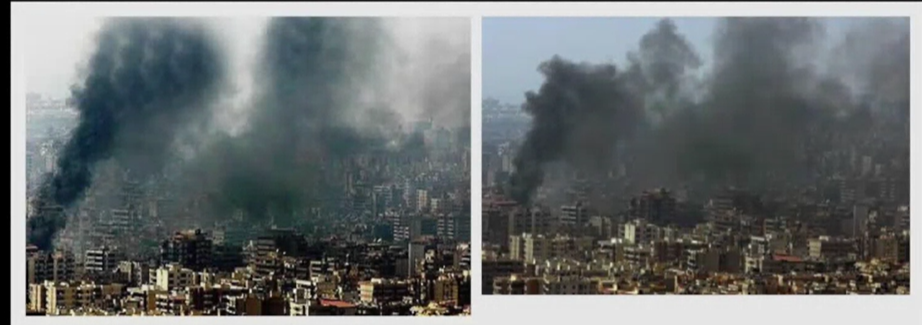
This picture is of the aftermath of an Israeli War attack on London-2006. In the first image additional black smoke has been added to make the image more dramatic and severe.


This Picture is of 2011 Spanish Sports Newspaper the second image is digitally altered. As you can see in the second image, the defender is removed from the reportage of a match thus it appears that no offside had taken place.

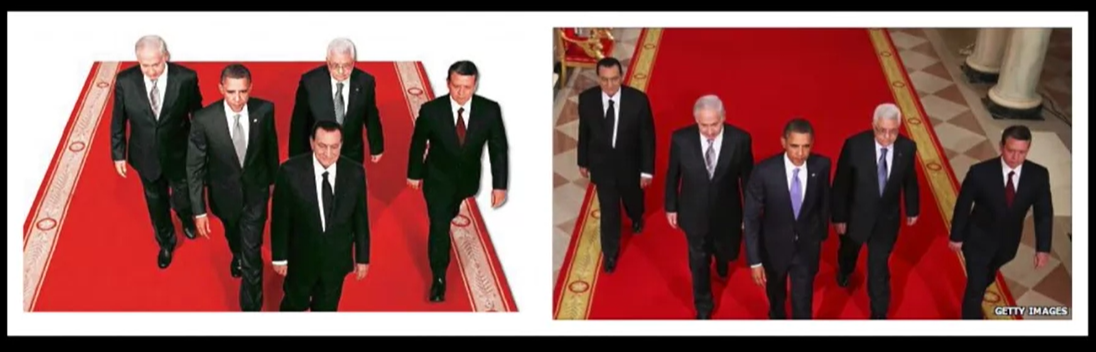
This picture is of the State run Egyptian newspaper where president Mubarak is walking with Israeli leaders. This image was edited where Mubarak is the head of the posses to show his leadership.

The Role of Advertisement also plays a vital role in altering images to make a certain impact and attract others. 

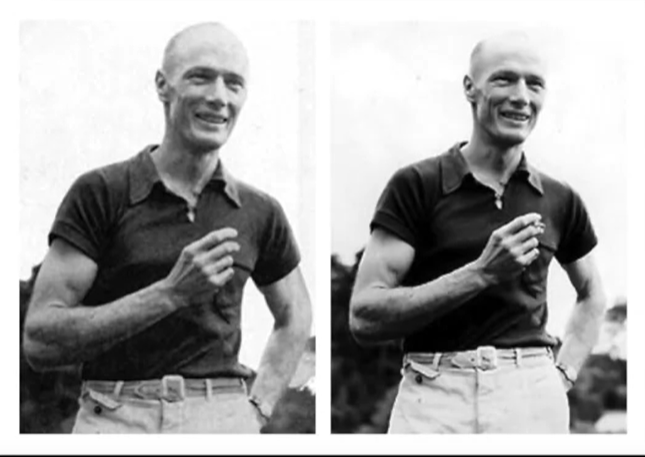
This is a 2005 image. Clement Hurd, the illustrator of the Children’s Classic book ‘Goodnight Moon’ had in the previous couple of decades been pictured on the back of the cover of the book holding a cigarette. In the new edition it was removed. This indicates how the concerns of people have been changed with the changing of time.

This is the 2007 Time Magazine ran article ‘How The Right Went Wrong’. This image displays fairly clearly Ronald Reagan, but digitally added was a Tear across his right cheek as if Reagan was lamenting after the event. ‘How The Right Went Wrong, so to speak.

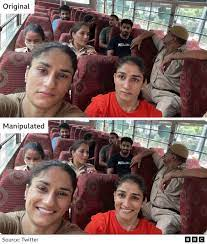
A recent case that exemplifies photo manipulation is the Indian Wrestlers' Protest, where a photograph of female wrestlers was altered using AI and editing tools. 

        The original picture portrayed both women as serious and sad, but the manipulated version depicted them as smiling. Such manipulation demonstrates how photos can be used to serve political and other interests while spreading fake news.


       In my interpretation, this course does not discourage the use of technical tools but rather emphasizes the need for clarity and fact-checking. It highlights the importance of always engaging in thorough fact-checking before believing in anything. With the advancement of AI and ultra-editing techniques, manipulating various forms of media, including pictures, has become increasingly effortless. Therefore, it is crucial to approach everything with a critical eye, verifying the information before accepting it as truth. While these resources can be valuable for documenting history, their credibility must be carefully assessed to avoid perpetuating inaccuracies or misinformation.


On Idleness by Dr. Samuel Johnson

  Samuel Johnson was one of the important writers of eighteenth-century English literature. He was a poet, essayist, critic, moralist and le...