Saturday, December 10, 2022

Understanding the Zeitgeist of the 20th century: From Modern Times to the era of Dictatorship

Thinking Activity

Understanding Zeitgeist of the 20th Century: From Modern Times to the era of Great Dictators

         This blog is prepared as a part of a thinking activity assigned by Dr. Dilip Barad sir, Department of English, MKBU to understand the Zeitgeist of the 20th Century: From Modern Times to the Era of Great Dictators. In this blog I am going to discuss major characteristics of the 20ty century and its emergence in the two most famous films of Charlie Chaplin, 'Modern Times' and 'The Great Dictator'.

★20th century socio-economic-political condition:

The twentieth century marks the end of the reign of Queen Victoria (1837-1901) and beginning of the reign of Queen Elizabeth II (1952-2022). Between 1902 and 1951 so many things had taken place, especially two world wars. The great euphoria for fighting for the nation was in the mind of people, but this euphoria became slow during the second war because of disastrous consequences of the first world war.

          In the first 50 years of the 20th century man was growing mastery of the physical world and its material resources.There was tremendous speed, progress and regress, sometimes forward and sometimes backward in every aspect of life. Emergence of science and technology gave great progress to various inventions like the internal combustion engine which made possible the invention of aeroplanes and other means of mass slaughter into world wars, nuclear power, motorcycle and car. Nuclear power has brought the threat of universal destruction by means of nation's saving. 

       Another major aspect of the 20th century is there was Hitler youth, who were on tutor or easily susceptible to emotional conditioning. Students were being used as active political partitions but in Britain the first duty of students was to study not to agitate- agitation being. The untutored political demonstration of youth is likely to lead either to wise reforms or to effective revolutions. But unfortunately it produced mob rule. 

              The values of Victorians were being cherished as it was now believed as superficial stupid and hypocritical. So the fluctuation of values started because now the ideas of the victorians were believed baseless. What victorians believed beautiful thought was now being considered hideous. The standard of artistic craftsmanship and of aesthetic appreciation begin to change fundamentally. 

                 The voice of authority in religion, politics and literature, which believed in a redness to accept phrases at face value without critical examination was prevailing in Victorian society. There was a firm belief in the permanents of 19th century institutions both temporal and spiritual. Among early 20th century writers the Victorian idea of the permanence of institution was displaced by the sense of universal mutability. H. G. Well's concept of 'Meanwhile' which says 'home as mere campsite' and G. B. Shows concept of three watch words 'Question! Examine! Test!' were at the centre. Both these writers have presented the same idea in their works. This was a generation of interrogative habits and minds who question everything before believing in it. 

        The revolt from victorianism was from a sense of stability, striving for orders, consciousness of dignity to the spiritual vacuum. The interrogative habit of mind was responsible for the spiritual vacuum leads the society towards anti victorianism. After two World wars people moved towards the philosophy of existentialism. Two groups were there in this century.

1. Bloomsbury Group:- the members of this group were from Elite or high class society. They were free thinkers of intellectual discussion, conflict between modern and ancient, vices and virtues and they were breaking traditions of victorians against family values. This group was taking 'art for the sake of art'. 

2. Fabian Society:- this group majorly concerns common people. They were trying to bring awareness about social and industrial culture. The idea of a welfare state also emerged which gave a policy of government for the welfare of people. Rightful concerns for under privileged people were at the centre.

               The 20th century is known as the century of the common man because of democracy. Whereas dictatorial intellectualism was also prominent.

                  The growth of mass production methods in industry led to deep concerns among sociologists because of a threat of death to craftsmanship and a lifetime of work on assembly line processes was destructive of interest in the object produced. 

       We can say that 20th century socio-economic-political condition is exactly opposite to the Victorian era and its values. So many inventions have taken place but at the same time the great fear is also there.

Frame study:-

           A frame is one of the many still images which compose the complete moving picture. The term is derived from the historical development of fm stoke in which the sequentially recorded single images look like a frame picture when examined individually.The term may also be used more generally as a noun or verb to refer to the edges of the image as seen in a camera viewfinder or projected on a screen. Thus, the camera operator can be said to keep a car in frame by panning with it as it speeds past.(Wikipedia)

         In the frame study of two movies 'The Great Dictator' and 'Modern Time', I will try to analyse frames from both these movies in the following perspectives.

  • Industrialisation
  • Rich-poor divide
  • Materialistic richness
  • Dictatorship
  • Mechanism
  • Death of craftsmanship
  • Capitalism
  • Starving for basic need - food, clothing, shelter and clothing
  • Egoistic leadership
  • Ghettoization
  • Rhetorical speeches

Click here to read frame study of 'Modern Times'

Click here to read frame study of 'The Great Dictator'

               To sum up, the socio-economic-political Zeitgeist of the 20th Century is accurately presented by these two movies by the great observer Charlie Chaplin.

Thanks for visiting...


Frame Study: The great Dictator

 Thinking Activity 

 Understanding Zeitgeist of the 20th Century: From Modern Times to the era of Great Dictators

       This blog is prepared as a part of a thinking activity assigned by Dr. Dilip Barad sir, Department of English, MKBU to understand the Zeitgeist of the 20th Century: From Modern Times to the Era of Great Dictators. In this blog I am going to study major frames from the movie 'The Great Dictator' by Charlie Chaplin, which is based on the Dictatorship prevailing in the 20th century.

Introduction:-          

             The Great Dictator is an American anti-war political satire black comedy film, released in 1940, which was both acted and directed by Charlie Chaplin. It Satirises Adolf Hitler and Nazism and condemning anti-Semitism. It was Chaplin’s most successful film at the box office. He continued to make silent films and into the period of sound films, Chaplin made this his first true sound film.

           In this film, Chaplin portrayed a Jewish barber who is mistaken for a tyrannical dictator. He plays up the charade and ultimately gives a speech in which he calls for peace and compassion. Chaplin, in a dual role, also played the fascist dictator named Hynkel who was modelled after Hitler. It shows the constant suffering of Jewish people(minority) because of the ego of their dictator to be 'Emperor of the World'. 

Frame study:-

              'The Great Dictator Is based on Dictatorship prevailing in the 20th century. The film opens with the mad desire of the dictator named Hynkel to be the dictator of the world and it ends with the speech of the Jewish barber who resembles Hynkel, in which he gives a message to spread equality, love, peace and happiness among all.

1. World War:

          The story of the film has taken place in a period between two world wars. The film starts with the ending of the first world war in 1918. 


               Military services have been the first and foremost priority for any nation. To strengthen these services, technology has played and still plays an important role. During the first and second world war science technology became more powerful. On one hand it provides comfort to human life by the invention of medical sciences, aeroplanes, vehicles, and other important inventions which are useful for human beings in their day to day lives. But on the other hand there was the invention of Nuclear power which plays destructive power. So in both these world wars, nuclear power has been used on a large scale to kill the human race who were opposing them. Aeroplanes were also invented, for both to provide transportation services and to throw bombs through airway. This contrast of the Best and the Worst use of technology is well presented in the film.
                 These frames are representing what worst can be done by human beings to the human being during these two world wars. Charlie Chaplin has captured this contrast in a much deeper way to satirise the enmity and destruction of human beings.

            This contrast is still being continued by the world. All the countries are continuously producing or buying weapons on a large scale. The whole world is now filled up with plenty of nuclear and atomic weapons. All the countries are buying or producing it to threaten the opposite or enmity country or continent, they are constantly having concern for the security of their nation, which has been increased in all three ways - Land, Air and Ocean. At the same time, we have a great threat for the upcoming situation. Now only a few or we can say that only one or two weapons(now existing weapons) can destroy the whole world within a blink of an eye. This invention is still being continued. So it paves a great threat for human peace and living.

2. Dictatorship:


             Dictatorship stays at a centre of this film because it is wholly based on the whimsical decisions taken by a leader to keep his personal ego. They begin to believe that he is the only one who can be the dictator of the whole world, but ultimately at the end there can't be such thing. Yes, it can be possible for while but it can't be any longer. This idea of the previous century is capture by Charlie Chaplin when Hynkel plays with the ballon on which the whole world is picture (map of the world) but ultimately it blows at the end of the play.

           Another frame of this kind is photo of Hynkel with a child. 


        Having photo with children can be considered ancient tradition which is also prevailing in the modern world. Political leaders or dictators have numerous photos with children to show how much concern they have towards children's welfare. They are playing politics with those who didn't even know what is it. If we look at the 21st century leaders, we would find plenty of the photos of such kind. Thai shows this tradition is constantly being inherited by leaders.

          I hope this blog will help you to understand the concept of Dictatorship and problems of the society in a much better way. All these frames depict major incidents and ideas which had taken place during the 20th century. So by this kind of studies, we come to know how literary art captures phenomena of a particular time. Charlie Chaplin is one of the best literature artists who presents bitter realities of the time in which he lived. He has vehemently criticised socio-economic-political conditions in a comic way.


Thanks for visiting...

Frame Study: Modern Times(1936)

Thinking Activity 

 Understanding Zeitgeist of the 20th Century: From Modern Times to the era of Great Dictators


       This blog is prepared as a part of a thinking activity assigned by Dr. Dilip Barad sir, Department of English, MKBU to understand the Zeitgeist of the 20th Century: From Modern Times to the Era of Great Dictators. In this blog, I am going to do a frame study of the film 'Modern Times By Charles Dickens' in the context of the 20th Century.

Introduction:

Modern Times is an American silent film, released in 1936, written and directed by Charlie Chaplin in which his iconic Little Tramp character struggles to survive in the modern, industrialised world. It is regarded as the last great silent film.

         The film was set during the Great Depression, centres on a luckless factory worker (played by Chaplin) who finds himself so unnerved by trying to cope with the modern equipment he must operate that he suffers a breakdown. After being institutionalised, he is freed, only to be mistaken for a communist agitator. He is arrested but released after preventing a jailbreak. He subsequently falls in love with a young girl (Paulette Goddard) whom he met when she was running from the police after stealing a loaf of bread. The factory worker and the girl have many adventures together as they evade the police and struggle for a better life. Eventually they escape for the open road. It is notable for being the last time that Chaplin portrayed the Tramp character and for being the first time Chaplin's voice is heard on film.  

Frame Study:

            'Modern Times' is all about the industrial world and its effects on working class people and their constant struggle which ends with the open road which shows the ending hope for well being. If we look at the film in this perspective, in the movie many frames directly tell the major ideas which are the major characteristics of the 20th century.


1. Mechanisation of human being under the influence of Industrialism:


                This is the very first frame - beginning frame of the movie. By th usage of clock Charlie Chaplin conveys that idea of the life of human being and their working time. This is not just a clock because it determines the dynamics of the lives of people. In the industrial world life becomes artificial. Everyday there is same routine and also there is nothing new to do. By this picture he wanted to present how human lives are mechanically controlled or we can say people "Slaves of Clock", which take us to the rise of industrial and that's why mechanical world of 20ty century.

2. Mobocracy and Dictatorial Democracy:


                 This is the very first frame - beginning frame of the movie. By the usage of clock Charlie Chaplin conveys that idea of the life of human beings and their working time. This is not just a clock because it determines the dynamics of the lives of people. In the industrial world life becomes artificial. Everyday there is the same routine and also there is nothing new to do. By this picture he wanted to present how human lives are mechanically controlled or we can say people "Slaves of Clock", which take us to the rise of industrial and that's why mechanical world of 20ty century.


        This is another example of Dictatorship. Where a single man- president of the industry is controlling the whole factory. We can say he is ruling over his factory. They are constantly watching over workers.


3. Mind, Money and muscles:

            In earlier times, physically strong men ruled over. But with the advent of technology, this hold is possessed by people with mental strength. Now Machines do everything and there is no need for men to show physical strength as such. So now mind and money came into power. Even in the 21st century, if we talk about this, technology has grown more and more. After the industrial revolution of the 20th century, we have the Digital revolution in the 21st century, which gave us a way to do work remotely also. In COVID pandemic of 2019, the whole world was imprisoned at home because of the fear of spreading the virus. Among this dire condition only because of digital media we were able to work without hurdles, to connect with all virtual. So the mind has become stronger than muscles.


             With the help of CCTV, supervision can be done sitting in a single chamber or place. After the invention of these types of watching technology it has become easier to see whether everything is done properly or not and all the instructions can be given instantly. At the same time it plays a dangerous role to control human actions by having constant watch over them.


4. Control on individual privacy:

               The invention of CCTV is being boon to all of us to have constant watch. It helps us in each and every aspect of life. The major aim of these cameras is to have watch on Criminal activities or wrong doings. With its help it becomes easy to find proofs. At the same time it becomes dangerous for individual privacy. Each and every place is covered by cameras, so human privacy is also being controlled by the use of machines. This is what Charlie Chaplin observes and puts it comically


          This frame advocates the same thing where human privacy is not lying even in washroom or toilet. In this sequence worker just smokes in toilet and have some leisure after long working hours. But in toilet also CCTVs are fitted and president is having constant watch on what workers are doing in toilet - means whether they are having leisure or not. And if yes, then he instructs him to work instead of smoking in working hours.
 
                This frame advocates the same thing where human privacy is not lying even in the washroom or toilet. In this sequence the worker just smokes in the toilet and has some leisure after long working hours. But in the toilet also CCTVs are fitted and the president is having constant watch on what workers are doing in the toilet - means whether they are having leisure or not. And if yes, then he instructs him to work instead of smoking during working hours.

5. Job security:- 

              Job security has been the prominent part of individual life, which can provide the basic human needs. But during the twentieth century workers were not getting sufficient wages or they were thrown out of the factory. The downfall of the factory also become the reason for this.


       Here Charlie Chaplin presence anti-capitalist or Marxist theory.

6. Basic Human needs: Food/Shelter/Clothing:-


       Though Frame study is the study where frozen frames should be studied. but I have used gif to give accurate analysis of this particular frame.  Because of capitalist system many workers lose their jobs and there was no money with them so that they need to steal food for livelihood. The Central character of the play- worker doesn't have home so finds home in prison. When the girl was kept for steak a piece of bread he admits that not she be he has stolen bread. The reason behind it was to get place to live. After the meeting of that girl and the worker, she found a home for them to live in because they were longing or dreaming for their own home. This home is made of of woods which breaks at the every single moment. But they feel happy here. Really the condition of people can make them to be satisfied in whatever they have.


7. Idea of Welfare State:-

         Welfare state is based on the welfare for citizen of the country which gives social security. This idea is presented when after the death of the worker his daughters was taken under the government custody which will provide them their livelihood.

8. Open Road - Hope:

             The movie ends with the open road which shows that in spite of all these hurdles, we have to keep hope for good in future. This frame is very much important then, now and forever, to eep hope for good after whatever wrong has happened in our life.


     Between the unending hurdles and problems this long road of hope always helps us to keep living, which is also the ideas of Charlie Chaplin himself that we can say in his life.               
            So I have studied these frames from the movie 'Modern Times'. All these frames depict major incidents and ideas which had taken place during the 20th century. So by this kind of studies, we come to know how literary art captures phenomena of a particular time. Charlie Chaplin is one of the best literature artists who presents bitter realities of the time in which he lived. He has vehemently criticised socio-economic-political conditions in a comic way.


I hope this blog will help you to understand the social, economical and political conditions of the 20th century.

Thanks for visiting...
              

Monday, November 14, 2022

Jude the Obsucre as a Bildungsroman novel

  Thinking Activity

Jude the Obscure 

            This blog is written in response to the thinking activity on the Novel 'Jude the Obscure' assigned by Dilip Barad sir, the Department of English, MKBU.

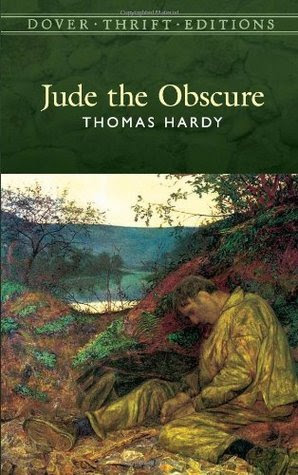
            Jude the Obscure is a novel written by one of the greatest Victorian Novelists, Thomas Hardy. It was published in 1895 and it is the last novel written by Thomas Hardy. After the publication of this novel, it was vehemently denounced by critics and the society because through this novel Hardy attacked the institutions which Britain hold the most dear, like higher education, social class and marriage. After its negative reception, Hardy resolved never to write other novels.

Thomas Hardy:-

              Thomas Hardy is one of the greatest novelists of all the Victorian novelists. He was born on 2 June 1840 In upper Bockhampton. He was the son of a master Mason. Hardy goat his formal education from the local schools around 8 years and later he read English, French and Latin books on his own. At the age of 16 he was apprenticed to an architect in Dorchester and then in London and again in Dorchester. He did this profession for almost 20 years. By this period he started to write poetry but none of it was published. His major success depends on his novels. His major novels are, 

  • Desperate Remedies (1871)
  • A Pair of Blue Eyes (1873)
  • Far from the Madding Crowd (1874)
  • The Return to the Native (1878)
  • The Mayor of Caterbridge (1886)
  • The Woodlanders (1887)
  • Tess of D'Uberville (1891)
  • Jude the Obscure (1895)

               'Jude the Obscure' was vehemently denounced by critics and the society. As a result of it Hardy never wrote novels and moved towards drama and poems, which are not popular.


Can we consider Jude the Obscure’ as a Bildungsroman novel? Justify your answer.

           Before considering 'Jude the Obscure' as a Bildungsroman novel, it is very much important to know what Bildungsroman novel actually means.


Bildungsroman is the combination of two German words: Bildung, meaning "education," and Roman, meaning "novel." 

"Fittingly, a bildungsroman is a novel that deals with the formative years of the main character, and in particular, with the character's psychological development and moral education. The bildungsroman usually ends on a positive note, with the hero's foolish mistakes and painful disappointments over, and a life of usefulness ahead." (Merriman Webster)

"Bildungsroman is a special kind of novel that focuses on the psychological and moral growth of its main character, from his or her youth to adulthood." (Britannica)

      In the nineteenth century these bildungsroman novels were more popular. Like,

  • David Coperfield
  • The Great Expectations
  • The Ordeal of Richard Feverel

        Thomas Hardy is one of the masters of this style of novels. The novel 'Jude the Obscure' is a novel containing the same idea. The novel perfectly suits the definition of the bildungsroman novel. 

In the journal ‘JUDE THE OBSCURE’ AND THE ‘BILDUNGSROMAN', FRANK GIORDANO says that,

" 'Jude the Obscure' preoccupied with Jude Fawley's developing awareness of his personal being and his efforts to define himself in order to function effectively and usefully in the society." (FRANK GIORDANO)

         Through his life and various important experiences, Jude develops and learns to measure his own growth. Jude Fawley is a poor orphan who is raised by his great-aunt Drusilla in the West Country village of Marygreen. He was inspired by his schoolmaster Phillotson to learn Greek and Latin. Fate, social conditions, and his natural instincts will suppress his idealism and his hopes for an ecclesiastic career. 

The novel is divided into five parts according to Jude's journey of life.

  1. Marygreen
  2. Christminster
  3. Melchester
  4. Shaston
  5. Aldbrickham
  6. Again in Christminster

        At the age of nineteen, he meets Arabella Donn, she marries him on the plea that she is pregnant with his child. But this marriage completely falls down. Arabella is also disappointed with her husband and goes to Australia with her parents. Here she remarries. Jude goes to Christminster, where he gets work as a stonemason. Still he wants to go to the University for further education. Now he is near to the culmination of his life,when he meets his distant cousin Sue Bridehead, a free spirited young woman, who attracts his attention. Soon after he falls in love with her. When they both meet for the first time, they both have different opinions about religion. Jude is a devout Christian, whereas Sue embodies pagan sensuality and a New Woman’s freedom.

          Sue leaves for Melchester and has been admitted to a teachers’ training college. After that Jude himself arranges for Sue to work with Phillotson, his former schoolmaster. He discovers that they plan to marry. one night Sue and Jude spend a night with each other for some reason and when college authorities know about it, she is expelled. Here after Jude declares that he is married. Sue also declares her marriage with Phillotson but then Jude finds that she is unhappy with her husband. Till the date, Jude has a kind of passion for the admission in various colleges at Christminster. Jude feels frustrated and also guilty of his love for his cousin because he realises that his interest in her is not compatible with Christian norms and social laws. That is why he quit church and burned his theological books.

         Sue asks Phillotson to let her live apart from him, with Jude and he agrees. Jude and Sue stay in Aldbrickham but here Sue doesn't allow him physical relationship. In between, Arabella reappears. So by Arabella's appearance, she threatened to hold on Jude and as a result of it she allowed intimacy. In the meantime, Arabella returns from Australia and reveals in a letter to Jude that they have a son. Sue and Jude decide to adopt the little boy, called Little Father Time, who has never been christened. Jude and Sue do not get jobs because of their reputation. They move to various places for livelihood. They try to find a shelter again at Christminster, but are unable to rent lodgings because they are not married, and Jude stays in an inn while Sue and the children rent a room. The novel reaches its climax with the horrifying death of the children. Where Little Father Time Kills his siblings and hangs himself. 

             Now at the end of the novel, after the death of their children, Sue and Jude become again opposite from each other's beliefs. But this time they have an ideology contradictory to what was their ideologies before, in the beginning. Sue, who was a free spirited woman who does not believe in orthodoxical ideas, at the end she becomes orthodoxical about her life and laws of God. The reason for her changing beliefs is her difficult life journey against the norms of the society and the death of her children. 

           At the same time Jude moves away from what he was earlier in the novel, a strong believer of Christianity. At the end he becomes the exact opposite of what he was earlier.

      Sue adopts a morality of guilt and sin, concluding that her children were sacrificed as a result of her sins. She feels that she has been punished by God for her relationship with Jude, she renounces her freethinking and is determined to repent her ‘sins’ by returning to Phillotson.

         Jude comes in relation with Arabella into a loveless marriage. It gives him physical and mental breakdown. As a result of it, Jude drinks heavily and deliberately seeks his own death; he exposes himself to rain and cold weather. Finally, he dies. This time only Arabella is there with the dead body of Jude.

            'Jude the Obscure' no doubt contains the moral and intellectual development of Jude but at the same time we should consider that the novel is rather tragic. The novel might be rather called a tragic Anti-Bildungsroman, a novel of disenchantment with existence and society, because it pictures the immense disparity between Jude’s imagined world and the real world, which causes his downfall.

"In Jude the Obscure, Hardy continues in the form of a tragic Bildungsroman, his main existential concern with man’s estrangement in the world. He reveals man’s loss of contact with the physical world. Jude is an existential outcast everywhere: at Marygreen, Christminster and Melchester" (Thomas Hardy's "Jude the obscure" as a tragic bildungsroman and a new woman novel)

           In this novel Hardy questions the very foundations of traditional marriage and class-based education. Hardy makes use of the form of a realistic Bildungsroman and introduces a New Woman character, but he goes far beyond this framework presenting psychological portraits of a modern man and a modern woman in a futile search for their selfhood. As Dr R. M. Patil says, "Sue's Character clearly proves that she is a 'new woman' who wishes to break down the conventional ways of living life." Hardy shows in a series of symbolic images the tragic clash between tradition and modernity in late Victorian society.

                The Development of the character of Jude ends up with the Modern insight of a free spirit man, but he loses everything in his life. And he dies at the end.      

           To conclude, Jude the Obscure is an excellent novel with moral and social concerns. He also denies the relevance of Christianity to a dehumanised society. 


Work cited:-

“Bildungsroman Definition & Meaning.” Merriam-Webster, Merriam-Webster, https://www.merriam-webster.com/dictionary/bildungsroman. 

Encyclopædia Britannica, inc. (n.d.). Bildungsroman. Encyclopædia Britannica. Retrieved November 14, 2022, from https://www.britannica.com/art/bildungsroman 

GIORDANO, FRANK R. “‘JUDE THE OBSCURE’ AND THE ‘BILDUNGSROMAN.’” Studies in the Novel, vol. 4, no. 4, 1972, pp. 580–91. JSTOR, http://www.jstor.org/stable/29531557. Accessed 13 Nov. 2022.

Hardy, Thomas. “Jude the Obscure.” The Project Gutenberg EBook of Jude the Obscure, by Thomas Hardy, 1 Nov. 2022, https://www.gutenberg.org/cache/epub/153/pg153-images.html. 

“Thomas Hardy's ‘Jude the Obscure’ as a Tragic Bildungsroman and a New Woman Novel.” The Victorian Web, https://victorianweb.org/authors/hardy/diniejko13.html#:~:text=In%20Jude%20the%20Obscure%2C%20Hardy,at%20Marygreen%2C%20Christminster%20and%20Melchester. 


Words:- 1550

Images:- 3


Thanks for visiting....


Sunday, November 13, 2022

The Importance of Being Earnest


Thinking Activity

The Importance of Being Earnest


            This blog is written as a part of thinking activity on the play 'The Importance of Being Earnest' by Oscar Wilde assigned by Dr. Dilip Barad sir, Department of English, MKBU.


Click here to read 'Importance of Being Earnest' as a Comedy of Manners.


The play repeatedly mocks Victorian traditions and social customs, marriage and the pursuit of love in particular. Through which situations and characters is this happening in the play.

            'Importance of Being Earnest: A Trivial Comedy for Serious People' is a play Written by Oscar Wilde. It was first performed in 1895 and published in 1899. It is being considered as the greatest dramatic expression of Oscar Wilde. This play is a comedy and classified as entertainment for Victorian society. Through this play, Oscar Wilde ridiculed Victorian customs and traditions, marriage and particularly the pursuit of love. In this play almost each and every character is having particular characteristics through which Wilde repeatedly mocks traditions and social customs, marriage and the pursuit of love.

              When it was first performed, this play was considered as a light comedy and classified as entertainment for Victorian society. However this day releases creativity that combines different styles. Wild is also known as gay. In the Victorian society there was so many tough lose on homosexuality. Many critics have also argue that this play had homosexual connotations.

         After reading the whole play one can come to the conclusion that through this place Oscar Wilde criticises the rules, regulations and manners of Victorian society. It should be also noted that he gives the opposite portrayal of the society and its manners to mock or satire Victorian society. 

              This play makes the audience laugh at their own values and beliefs. He also gives melodrama with the touch of farce. While going through the play, one can not say which genre is dominant, Comedy or Satire, because both go parallel in this play. While talking about determining particular genre of this play, Brigitte Bastiat says that,


"Wilde uses absurd and exaggerated, nonsensical language, paradoxical humour and puns. In fact, he invents a new genre, difficult to imitate, combining farce, comedy of manners, social satire and, I would add, “gender parody”. 

He further says that,

"Judith Butler defines “gender parody” as follows: “Gender parody reveals that the original identity after which identity fashions itself is an imitation without an origin.”


  • Name Earnest 
  • Marriage System
  • Gender Identity
  • Triviality of people
  • Flipping Personality
  • Female Mindsets


Name Earnest:-

      According to Merriam Webster Dictionary the word 'Earnest' is characterised by or proceeding from an intense and serious state of mind.

"If you are earnest, it means you are serious about something."

     The meaning of the Name Earnest is opposite to what Wilde describes through Jack.

        In this play Jack Worthing has a split personality by using two names - Jake and Earnest. Algernon uses the Name 'Earnest When he meets Cecily. Both the ladies are fond of the name Earnest. In act 2, Cecily and Gwendolen quarrel with each other for the name Earnest, as this name was introduced by both Jack and Algernon. This dispute arises because of another reason and that is that both Cecily and Gwendolen are deeply fond of the name Earnest. 


           Here, Wilde gives an illustration of the Victorian craze behind silly things. Both Cecily and Gwendolen are made of the name, not of Actual person.


Gender Identity:-

                Male and Female Characters have opposite nature from their Gender. When Lady Bracknell talks Jack she is glad to hear that Jack smokes because 

‘A man should always have an occupation of some kind’

      It is an opposite stereotype about women’s activities. Upper-class women were idle but sometimes did some volunteer work or some craftworks at home. It was assumed that they had “an occupation of some kind”. But what do we know about what men and women are supposed to do, like and dislike? What are men’s and women’s preferences supposed to be?

      Gwendolen says in Act II that ‘‘the home seems to be the proper sphere for the man’’. Well it sounds too funny if we will take it as an example to look at modern society. Though in the 21st century, so many things have changed about gender stereotypes, many times we can see that if a man is allotted to household work, people see it as something which is out of their syllabus. The same thing if we think about women who are more independent in their life and earning their livelihood, it is being highly criticised by the society. So through these dialogues, Wilde depicts what Victorian society lacks.  

            Throughout the play, Oscar Wilde asks the following question: is biology always the framework which constrains socialisation practices, making it impossible for culture to minimise, rather than eliminate, the effects of natural biological differences between men and women? This question is also striking in our minds even in the modern World.

        Oscar Wilde depicts women more superior than men. In the play, Algy and Jack are idle and lazy, but morally the women are not better than them: like them, they are idle, lie, cheat and are interested in money. Now Wilde also gives an idea of their similarities.


Marriage:-

           In the Victorian society, Marriage was seen to encourage social stability and moral behaviour, and allowed secure transfer of property within a family. In 1870s property acts was passed and women got right over their wages. 


        Oscar Wilde has captured this phenomenon in this play by the different perspective of women towards their property and its spending. The objectives of marriage stay the same from the beginning to the end of the play. The concept of marriage is based on Money, Social status and family identity. This is portrayed by the character of Lady Bracknell. 

"What is your income?"

"To lose one parent, Mr. Worthing, may be regarded as a misfortune; to lose both looks like carelessness. Who was your father? He was evidently a man of some wealth. Was he born in what the Radical papers call the purple of commerce, or did he rise from the ranks of the aristocracy?"

"To be born, or at any rate bred, in a hand-bag, whether it had handles or not, seems to me to display a contempt for the ordinary decencies of family life that reminds one of the worst excesses of the French Revolution".

             All these dialogues are spoken by Lady Barcknell, by which we can get that she is the one who wants that a man who is not wealthy or unknown from his own identity is not suitable for hee daughter.


Algernon says, 

“Divorces are made in heaven.”

This statement exposes the problems which were among a lot many married people and till now. People thought and think of marriage as a bound not bond.


Love:- 

       Love is portrayed in the play conditioned with the name. Love of two gentlemen is because of their true affection towards their beloved. Jack loves Gwendolen and that is it. There is not any condition of his love. He just wants her in his life. Algernon also does the same. But on the other hand, love of Gwendolen and Cecily is conditioned with the name of their beloved. In act 1, Gwendolen gives explanation why she likes the name Earnest, by her statements,

"It suits you perfectly. It(Earnest) is a divine name. It has music of its own. It produces vibrations."


"Jack? . . . No, there is very little music in the name Jack, if any at all, indeed. It does not thrill. It produces absolutely no vibrations …………….……….. The only really safe name is Ernest."


Flipping Personality:-

            Almost all the characters have double personalities. Jack has another personality named Earnest. Algernon also Bunburying himself. He also introduces himself as Earnest at Manor House. Both the Female characters show their double standard personality particularly when they come to know about each other's Earnest. First they go with arguments and later on when they both come to know that none of them have the name Earnest They call each other sisters.

Cecily: "You will call me sister, will you not?"

          Lady Bracknell does not give her approval to Jack's proposal of marriage. Lady Bracknell is, of course, a master of paradox in the play. Initially she rejects Jake when he appears as Jack and Cecily. When she finds Cecily has a large fortune, she immediately approves of her marriage to her nephew Algernon. During a heated argument about the belonging of Jack Worthing, Lady Bracknell confesses, "I dislike arguments of any kind. They are always vulgar, and often convincing".This time she is not giving her consent for the marriage of Jack with her daughter as she doesn't know anything about the birth of Jack. Jack refuses the marriage of Cecily as he is her guardian. The bet of Jack and Lady Bracknell is also amusing. He will only give his consent if Lady Barcknell will give her consent for the marriage of her daughter Gwendolen with Jack. 

"But my dear Lady Bracknell, the matter is entirely in your own hands. The moment you consent to my marriage with Gwendolen, I will most gladly allow your nephew to form an alliance with my ward."

      This statement of Mr. Worthing is also amusing. This presents how people look for their own sake only.


Triviality of the Time:-

            Triviality of the play is commencing from the starting to the end, throughout the play. Incidents like,

  • Jack as Earnest
  • Algernon as Bunbury
  • Proposal of Mr. Earnest to Gwendolen
  • Lady Bracknell's Arguments over their marriage
  • Announcement of the Death of Earnest 
  • Algernon introduces himself as Mr. Earnest Worthing
  • Gwendolen and Cecilia's arguments over the name of their beloved
  • Lady Bracknell's heated Arguments over the marriage of Cecili- Algernon and Jack-Gwendolen
  • Miss Prism's past, where she forgot a child in the Clock room of the Victoria Station.
  • That child is Jack and his real name is Earnest


          In act two, we can see the identity crisis also. Gwendolen speaks below dialogue to make her feel inferior and to mock Cecily's family existence.

" GWENDOLEN.

Perhaps this might be a favourable opportunity for my mentioning who I am. My father is Lord Bracknell. You have never heard of papa, I suppose."

            All these incidents make this play more sarcastic and humorous. The scene of Prism is rather sarcastic which shows hiddenly what happens when women start to read and write. Because during the Victorian era, women got rights of education and voting. 

           To sum up, throughout the play Wilde does not treat characters and situations seriously, thus debunking the very notion of seriousness. This showed that there was a lack of seriousness in people about seriousness. Wilde satirizes the Victorian society in a witty way where the audience laughed at their own mistakes. 


          Here is the whole play:-


I hope this blog will be helpful to you.

Thanks for visiting…


Words:- 1820

Images:- 4

Videos :- 3

Saturday, November 12, 2022

Hard Times

 Presentation Semester 1

Education and Industrialism in 'Hard Times'


This is my presentation on Paper no. 104: Literature of the Victorians:


Here is the video Recording of my presentation video:


I hope this presentation will be helpful to you.
Thanks for visiting...

The Development of English Drama

 Presentation Semester 1

The Development of English Drama


This is my presentation on paper no. 105: The History of English Literature From 1350 to 1900:-


Here is video Recording of my presentation:


I hope this presentation will be helpful to you.
Thanks for visiting...
Expert Lecture Review

 Expert Lecture On Economics by Hemilton Mahida Ajit Bhil-  https://ajitbhil.blogspot.com/2026/02/review-writing.html?m=1     Sagar Rathva- ...