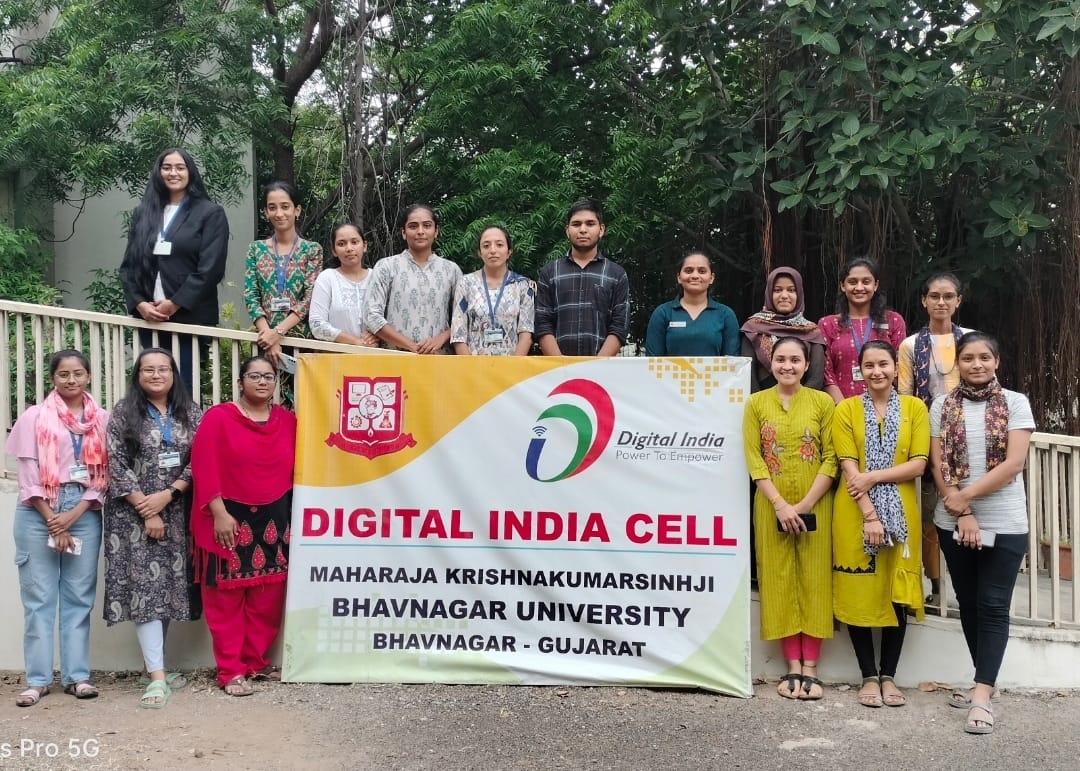
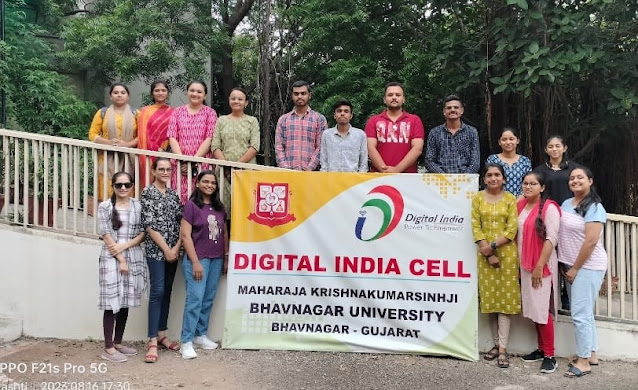
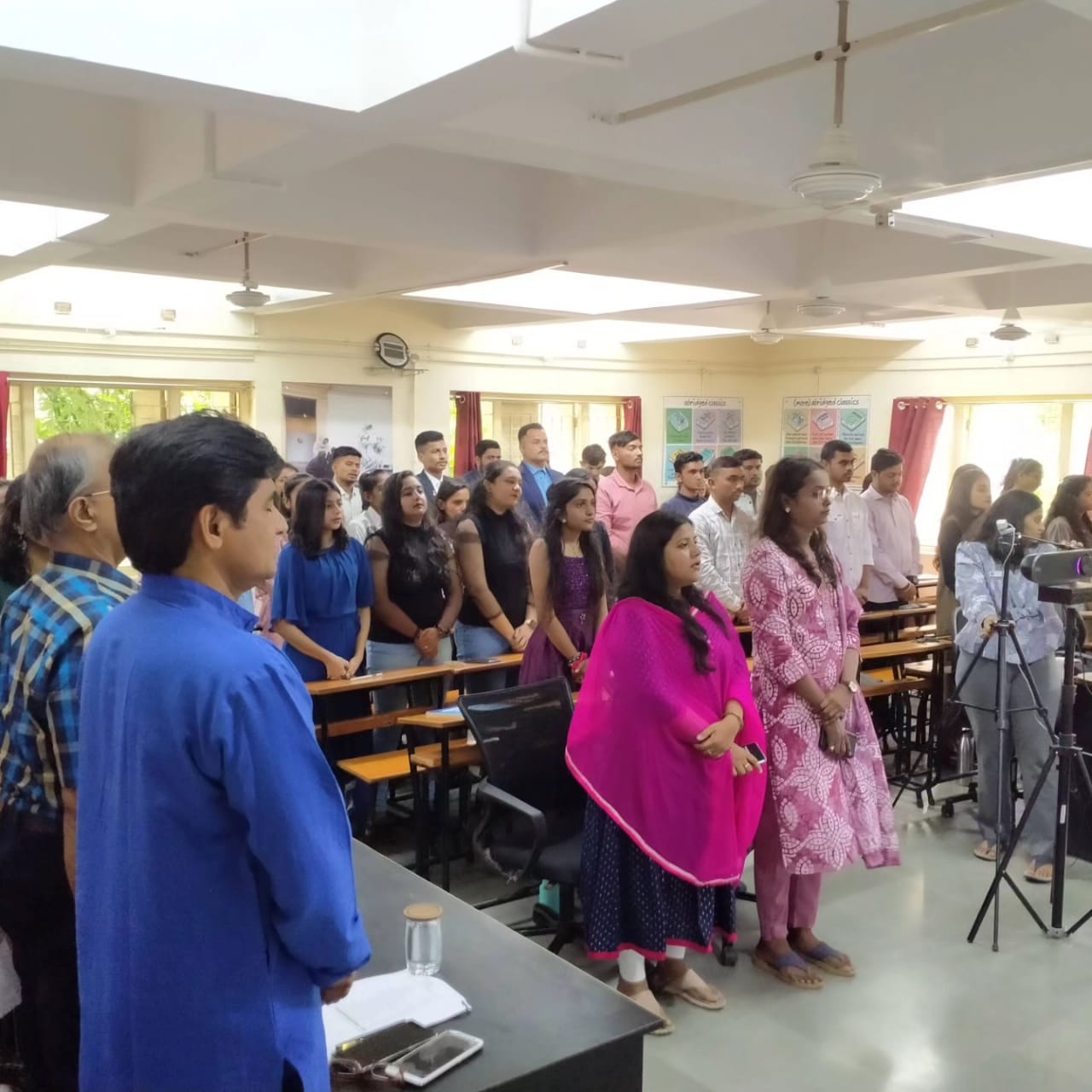
Sunday, August 20, 2023

Imagination- An Art of Seeing


A Photography workshop
by Kaushik Ghelani

    In the realm of observation and imagination, there are complexities that escape our first glance and challenge normal thoughts. This mix of sharp awareness, careful observation, and endless creativity is crucial in fields like arts, science, and media. Photography, which was once niche art, now blends seamlessly into this trio, inviting us to explore its depths with a keen sense of perception. 

           You might wonder why I am beating around the bushes. So let me navigate you through my transformative encounter with the realm of imagination and observation, as facilitated by none other than the esteemed wildlife photographer and filmmaker, Kaushik Ghelani sir. Today's workshop unfolded under the evocative banner of 'Imagination - An Art of Seeing,' encapsulating the essence of the day's photography workshop. 


In this blog I am going to reflect my learning outcome of this workshop.


           This workshop was divided into two sessions. In the first session Kaushik sir taught us the art of seeing and observing. It is about aesthetics, solely depend on how we see it. So the major focus of the first session was of how to see and observe our surroundings. He made us acquainted with the mechanism-various rules and angles of photography. The second session was of practical teaching learning, where Kaushik sir gave us a task to click photos around the campus. After an hour, photos taken by us were critically analyzed by him and the suggestions were also given how could we make the same frame unique with minor changes and also asked the the meaning conveyed through the frame.

Learning Outcome:

According to sir photos can be of two types: 

1. One that is captured by just a chance and 
2. The other one is intentionally clicking by applying the thought process what we want to capture. 

Sir emphasized that everyone can teach you camera but no one teach you photography.  Then he talked about various editing tools, various websites to put our photos.

There are two fundamental rules of aesthetics of photography:
  • Always keep your eyes open
  • Learn how to see things
These are probably fundamental rules of photography and other visual arts.

So the first session was all about teaching us how to capture photos, where he included various mechanisms of photography including, 

  1. Rule of 3rd( 1:3 preposition)
  2. Golden point
  3. Centre focus rule 
  4. Symmetry
  5. Geometrical shapes
  6. Learning lines
  7. Head/Leading room
  8. Depth of field

1. Rule of Thirds: This principle involves dividing your image frame into a grid of nine equal parts using two horizontal lines and two vertical lines. The points where these lines intersect are the points of interest. Placing key elements at or along these lines can result in a balanced and visually appealing composition. It also can be seen as three different layer of one photo.

2. Golden Point (Golden Ratio): The Golden Ratio is a mathematical concept often used in art and design. It suggests that certain proportions, such as a line divided into two segments in a specific ratio, create aesthetically pleasing compositions. Placing subjects or points of interest according to this ratio can result in harmonious images.
By Kaushik Ghelani


3. Center Focus Rule: Placing your subject at the center of the frame can create a strong and direct visual impact. This approach works well when you want to emphasize the subject's symmetry or create a sense of stability.
 By Kaushik Ghelani


4. Symmetry: Symmetry involves arranging elements in an image so that they are balanced and mirror each other across a central axis. Symmetrical compositions can create a sense of harmony, order, and calmness in an image.
By Kaushik Ghelani


5. Geometrical Shapes: Incorporating geometric shapes (such as circles, triangles, and squares) into your composition can add structure and visual interest. These shapes can guide the viewer's eye and create a dynamic visual experience.
By Kaushik Ghelani

6. Learning Lines: Learning lines are implied or actual lines in an image that guide the viewer's eye and create a sense of movement. These lines can be straight, diagonal, or curved, and they help lead the viewer's gaze through the composition.
By Kaushik Ghelani


7. Head/Leading Room: This refers to the space in front of a subject's face or the direction in which a subject is looking or moving. Providing adequate head or leading room ensures that the subject has space to "breathe" and move within the frame, preventing a cramped or claustrophobic look.
By Kaushik Ghelani

8. Depth of Field: Depth of field refers to the range of distances in a scene that appear acceptably sharp in an image. A shallow depth of field results in a blurred background and a sharp subject, while a deep depth of field keeps more of the scene in focus.
By Kaushik Ghelani


These principles are tools that photographers use to create compelling and visually engaging images. All these rules are intertwined with each other as well. 

Breathing Space:
Allowing breathing space within each image is of paramount importance, as it plays a pivotal role in conveying the essence of the photograph. Adequate space around the main subject helps create a balanced composition that draws the viewer's attention to the subject while also providing context.

Negative Space:
In photography, it's crucial to consider the negative space within a photo. Negative space refers to the areas around the main subject that are intentionally left empty. Excessive negative space can distract from the essence or story of the photograph, making it important to exclude unnecessary empty areas that don't contribute to the overall message. Have a look at this photo captured by me.
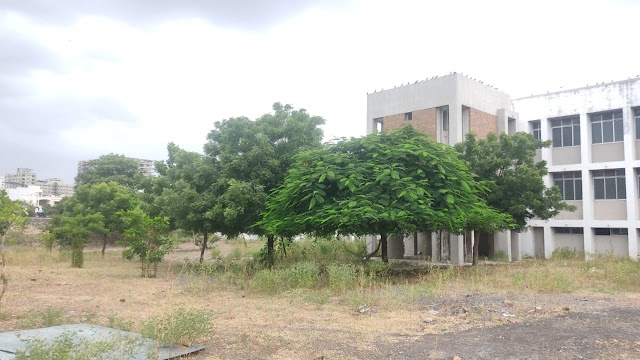
In this photo at the bottom left, you will find unnecessary space. But now look at the same cropped photo:

This this you will find the photograph with no negative space and thus looks eye-catching.

Breaking Rules:
While understanding and applying photography principles can undoubtedly enhance your work, it's essential to remember that breaking these rules creatively can lead to unique and captivating results. Pushing the boundaries and experimenting with unconventional approaches can yield visually engaging outcomes that stand out.

Narrating the Story Through a Photo:
One significant aspect emphasized by our instructor was the art of storytelling through photography. A well-crafted photograph should have the power to convey an entire story with just a single glance. As evident from the start of this blog, the intention was to weave a narrative rather than merely reporting events. This approach, suggested by our instructor, involves capturing not just what we see, but also what we think and feel while taking the photograph.

At the conclusion of our first session, Kaushik sir assigned us a task: to capture five photos and submit them after the recess. We ventured into the university campus, with our newfound knowledge and understanding of photography techniques. This practical session put our comprehension and creativity to the test, challenging us to apply the techniques while infusing our unique storytelling perspective into each photograph.

I first went to the department's terrace, where I aimed to depict the contrast between nature and human construction, symbolized by the juxtaposition of trees and a cement building. 


The second photo I captured shows two distinct perceptions. 


In the depicted image, a group of birds is sitting on a building rather than on trees. This scene gives rise to two contrasting interpretations. On one hand, it could symbolize human encroachment on natural habitats, where birds are compelled to seek shelter on man-made structures due to diminishing tree cover. On the other hand, it could signify the adaptation of certain bird species, such as pigeons, to an urban environment where they increasingly find shelter and nesting sites on buildings rather than traditional tree branches. This duality of meaning prompts us to reflect on the complex relationship between urban development and the natural world, highlighting both the challenges and resilient adaptations that coexist in our shared environment.

I also attempted to take a photo of a butterfly using my camera lens. However, it proved to be quite challenging because butterflies move swiftly in various directions. Some of my classmates were successful in capturing butterfly photos, but I struggled to do so. The most important lesson I learned is that patience is essential when trying to photograph insects, birds, or animals. Additionally, it's crucial to be mindful of our own movements to avoid disturbing them or their surroundings.

During my attempt to photograph a butterfly, I encountered another issue. Instead of getting a clear background and a focused butterfly, I ended up with a blurry butterfly as the main subject. 

This mistake rendered the photo unusable, unfortunately. This experience highlighted the significance of refining my techniques and focusing on the right elements to create impactful photographs.

In essence, this early experience in the course highlighted the interplay of technical knowledge, patience, creativity, and respect for subjects when narrating stories through photography.

After attempting to capture various photos, I asked sir and discussed the challenges I faced. In response, he shared some basic pictures that he had taken around the university campus—the same location assigned to us. That Pictures were rich in meaning and techniques. This interaction helped me realize that when starting out, it's not essential to immediately tackle difficult shots. Instead, I could begin by photographing everyday objects while applying the techniques I had learned. These foundational experiences would guide me forward.

As sir wisely advised, photography is a field where personal exploration is key. As I mentioned earlier in this blog, it's not possible for anyone to impart all the knowledge you need. Learning in photography is a continuous journey, and growth comes through ongoing experience. According to sir, one of the ways to progress is by critiquing our own photographs. I am pretty sure that we've developed the habit of assessing our own work critically, which is a valuable skill in photography.


Following this, we all assemble for the second session. During this session, sir reviewed the photographs we had taken and offered valuable advice on how to enhance our photography. He emphasized the importance of capturing photos in a way that clearly communicates the subject's story and meaning, making it easily understandable to viewers.

Moreover, during the session, three numbers were given to the good photographs. Avni secured the first position, Dhruvi from the Life Science department came in second, and Drashti claimed the third spot. This acknowledgment added a layer of motivation to our learning experience.

The workshop ignited our creativity and expanded our visual perspectives. Equipped with fresh insights, we are now poised to infuse each photograph with an artistic essence. Our goal is to create narratives that go beyond the ordinary and embrace the extraordinary, capturing moments that resonate with depth and significance.

I would like to express my sincere gratitude to Kaushik sir for imparting invaluable photography skills to us. A special note of thanks goes to Vaidehi Hariyani ma’am for organising this workshop. I am also grateful to Dilip Barad sir for his constant encouragement to excel in diverse domains. The event also witnessed the presence of students from the life science department, and I extend my gratitude to them as well.


{Words: 1858
Images: 22
Videos: 2}

Thanks for Visiting..

Friday, August 18, 2023

ICT Workshop Presentations


In this Blog I have attached two PPTs that were presented in the ICT Workshop at the Department of English, MKBU.

1. Creating Impactful Presentations: A Deep Dive into PowerPoint and Google Slides:


2. MOOC Courses:


Wednesday, August 16, 2023

ICT Workshop 2023

ICT Workshop 2023

This blog is based on two day's ICT workshop, organized by the ICT Committee of the Department of English, MKBU.

       Today marked the conclusion of the ICT Workshop, an endeavor that holds paramount significance. This year, ICT workshop was organized in two distinct parts. The initial part focused on hardware, while the subsequent two-day workshop was dedicated to introducing various e-tools.


What is ICT and Why is it important to acquire these skills ?

     Information and Communications Technology (ICT) represents an expansive term encompassing information technology (IT), with a particular emphasis on unified communications and the integration of telecommunications, computers, software, storage, and audiovisual components. ICT empowers users to access, store, transmit, comprehend, and manipulate information in diverse ways.

    The infusion of Information and Communications Technology (ICT) into the educational sphere can profoundly influence student learning, contingent upon the digital literacy of educators and their adeptness in its integration within the curriculum. Educational institutions leverage a diverse array of ICT tools to facilitate communication, content creation, dissemination, information management, and storage.

           In this contemporary digital age, ICT stands as a pivotal force in shaping our daily lives. The landscape of teaching and learning has been significantly reshaped by technological advancements. Proficiency in foundational ICT skills has become indispensable for navigating this digital realm and effectively engaging with its nuances. As students specializing in language and literature, it is imperative for us to familiarize ourselves with these tools in order to enhance our ability to effectively convey ideas through various digital platforms.

          Within our Department of English, we have embraced the cultivation of essential ICT skills to bolster our academic pursuits. The guidance of Barad sir has been instrumental in motivating us to acquire and harness these skills. Our learning experiences have been enhanced through the utilization of digital platforms such as Google Classroom, online presentations, blog writing, Creating YouTube Videos, and the establishment of personal websites. In the dynamic pace of our world, such digital proficiency is pivotal for staying attuned to evolving paradigms.

        The advent of technology and ICT has admittedly introduced disruptions within the job market. However, as aptly emphasized by Barad sir, technology isn't a harbinger of job loss but rather an enabler of diverse avenues for economic participation. This insight was vividly exemplified by his own YouTube channel and featuring videos from content creators who have achieved the prestigious Silver and Golden Button awards. These awards symbolize recognition and appreciation for their outstanding contributions to content creation.

        A noteworthy aspect of our ICT journey is the collaborative knowledge-sharing culture that thrives within our student community. Seasoned students impart their expertise to their juniors, thereby perpetuating a cycle of learning and mastery. This symbiotic approach not only enriches the learning journey but also reinforces the understanding of the subjects at hand.

     Barad sir came up with the vision to organise ICT workshop since 2010 to encourage students and so the teachers towards digital skilling to work effectively in this fast racing time. Journey of each student of the department starts from Scanning QR code of Google classroom to making digital portfolio at the end of the last term, so we can acces all of our work and documents at one platform

            So as a part of it, senior students from Semester 3 assumed the role of resource persons for a comprehensive Two-Day ICT Workshop, admirably coordinated by ICT Committee Leaders Ghanshyam and Rajeshvariba. The workshop's core objective was to familiarize junior students with the array of ICT tools that bolster contemporary learning.         
      Over the course of the first day, essential Google tools took center stage, illustrating fundamental digital utilities. These included 
  • Google Account, Gmail - Hina Parmar
  • Drive, Chrome - Bhavyata Kukadiya
  • E - Skills and basic Terminology - Rajeshvariba Rana
  • Google Classroom - Mansi Gujadiya
  • Google form and Sheets - Ghanshyam Katariya
  • Google Docs - Anjali Rathod
  • Demo of Lab E - Muster G - Form :- Ghanshyam Katariya
  • Blogger , Grammarly - Pooja Bhuva
  • Google Slides , PPT - Trushali Dodiya
  • Slideshare - Gayatri Nimavat
  • Linkedin & TEd.Ed - Me Hetal Pathak
  • Google Meet, Zoom - Ghanshyam Katariya

             The second day saw the introduction of pivotal tools, such as 

  • Google photos, Calender & keep - Payal Bambhaniya
  • National Digital Library - Insiyafatema Alvani
  • Swayam & Mooc courses - Trushali Dodiya
  • Kahoot and Mentimeter - Drashti Joshi
  • Youtube and YT Studio :- Rajeshvariba Rana
  • MLA Citation :- Rajeshvariba Rana
  • Video Citation :- Avani Jani
  • Google sites :- Pooja bhuva
  • Digilocker :- Drashti Joshi
  • ChatGpt & Google Bard :- Rinkal Dangar
  • Stream yard and OBS Studio :- Ghanshyam Katariya


          This workshop did not merely impart technical skills; it illuminated the conceptual understanding behind these tools. With a suite of 16 PCs provided by the university this year, each student had an opportunity to delve into hands-on experiences. The resource persons seamlessly merged PowerPoint presentations with live demonstrations, creating a holistic learning environment.


             I extend my gratitude to Barad sir for his unwavering support and encouragement towards this form of progressive learning. Under his mentorship, all of us have embarked on personal journeys of establishing YouTube channels, blogs, and websites.

         Congratulations are in order for the dedicated leaders of the ICT Committee, whose concerted efforts ensured the resounding success of this workshop. Furthermore, the ICT committee's provision of e-Certificates of Participation to attendees and Resource Persons reflects their commitment to acknowledging and appreciating the pursuit of knowledge.

              In summation, the ICT Workshop epitomizes more than a mere showcase of skills; it is a gateway to understanding, enabling, and thriving within the digital realm. Through the collective synergy of students, mentors, and technology, we continue our voyage of exploration and empowerment.


Thanks for Visiting...

Sunday, August 6, 2023

Derrida and Destruction

Deconstructing the Advertisement


Hello readers! This blog is written in response to the Thinking activity assigned by Dr. Dilip Barad sir, Department of English, MKBU. In this blog I am going to deconstruct a Hindi Advertisement of Center Fresh Chewing Gum. But before diving into that, Let's first have introduction of Derrida and Clarify the Concept Deconstruction.

Jacques Derrida:


Jacques Derrida, an Algerian-born French philosopher, left an indelible mark on the late 20th-century intellectual world with his controversial and influential critiques of Western philosophy. Born on July 15, 1930, in El Biar, Algeria, he passed away on October 8, 2004, in Paris, France.

At the core of his philosophical contributions lies the concept of deconstruction, a method he employed in numerous texts. Derrida's deconstruction emerged from meticulous examinations of Ferdinand de Saussure's linguistics and the phenomenology of Husserl and Heidegger. This approach made him a prominent figure in post-structuralism and postmodern philosophy. However, it's worth noting that Derrida distanced himself from the post-structuralist movement and explicitly disowned the term "postmodernity."

What is Deconstruction?

"Deconstruction, a groundbreaking theory by French philosopher Jacques Derrida, challenges traditional notions of language, meaning, and truth. Derrida's work unveils the inherent complexity and ambiguity of language, revealing that it is not a stable medium for conveying fixed meanings. Instead, it relies on a web of differences and interdependent binary oppositions.

At the heart of Derrida's theory lies the concept of 'différance,' a play on the words 'to differ' and 'deferment.' Différance suggests that meaning is not immediate but deferred and contingent on the context. The 'trace' of past meanings lingers in language, influencing the present interpretation.

Deconstruction involves critically analyzing texts to expose and challenge underlying assumptions and hierarchies. It demonstrates that concepts gain significance by relying on their opposites. Derrida's deconstruction dismantles the notion of a singular, stable meaning and emphasizes the infinite play of signifiers, leading to a chain of references without an ultimate truth.

Moreover, Derrida critiques 'logocentrism,' the Western tradition's tendency to privilege spoken or written words as the source of truth. He contends that context is crucial in understanding texts, as meaning is contingent on cultural, historical, and linguistic factors.

Derrida's deconstruction has profound implications across disciplines, including literary theory, cultural studies, linguistics, and philosophy. It challenges prevailing power structures and opens up new possibilities for interpretation and understanding.

In conclusion, Deconstruction is a revolutionary theory that questions the stability of language, the fixity of meaning, and the hierarchies imposed by binary oppositions. It invites us to rethink how we interpret texts and challenges us to embrace the complexities and uncertainties inherent in language and communication."
Generated By ChatGPT(Prompt: Can you tell me in brief about the Deconstruction Theory By Derrida?)


How to Deconstruct a Text?


In this blog I am going to deconstruct an 2014 Indian Advertisement of Center Fresh Chewing Gum. Before the decontruction, let's watch the Advertisement.


(Center fresh India)

Throughout the ad, we encounter numerous binary oppositions that draw the attention of viewers and critics alike. The commercial starts with a man experiencing a toothache, and a woman suggests various products such as a particular toothpaste, fairness cream, TV, cement, and memory pills to alleviate his discomfort. However, these products are presented in a humorous and exaggerated manner, creating a sense of confusion for the audience. At first glance, it may seem like an advertisement for a brand named "Ye Wala."


However, the ad cleverly unfolds its true message at the end with the tagline, "Khamosh! In sabko chahiye Ye wala Chewing Gum. Center Fresh, Jaban Pe rakhe lagam."


          Upon deeper analysis, the first cycle of "Ye Wala" refers to the people in society who constantly offer unsolicited advice or suggestions without being asked. This aspect of the ad touches on the presence of such individuals in our lives. Additionally, it plays on the abundance of advertisements that inundate our daily lives, trying to influence our choices and preferences.


  The commercial adopts a parody approach, cleverly mimicking clichéd advertising styles. It starts with a satirical portrayal of a leading toothpaste brand's advertisement and then rapidly transitions into a series of nested films for "Yeh Wala" brands across various categories like cement, fairness creams, and toothpaste. This approach aims to entertain and engage the audience while subtly conveying its underlying message.


         These nested films represent a cleverly constructed Matryoshka doll of clichéd advertising tropes. According to Avasthi, the mastermind behind the ad, it serves as an inside joke targeting the advertising fraternity. This humor would not have been as effective or relevant a decade ago since consumers were not as deeply engaged and connected to advertising back then. The ad cleverly capitalizes on the current era of heightened consumer involvement with advertisements to deliver its witty message.(BHATT)


           The one loophole remains to interpret is that the advertisement criticizes the other advertisements by presenting cliched of advertisement. And this point remains open for the interpretation or deconstruction for us.

In conclusion, the advertisement for Center Fresh Chewing Gum artfully deconstructs the prevalence of unsolicited advice and the inundation of ads in our lives. With a humorous and satirical tone, it highlights the need to silence those constant suggestions by humorously presenting a chewing gum as the solution to keep conversations fresh and engaging. And thus provides a loophole to see the binary oppositions.


Work Cited:

BHATT, SHEPHALI. “Time for Center Fresh to move away from 'Zubaan pe rakhe lagaam' tagline?” The Economic Times, 19 March 2014, https://economictimes.indiatimes.com/time-for-center-fresh-to-move-away-from-zubaan-pe-rakhe-lagaam-tagline/articleshow/32241758.cms?from=mdr. Accessed 6 August 2023.

Center fresh India. “Center Fresh Yeh Wala Ad.” YouTube, 18 February 2014, https://youtu.be/RFYG4qF_vXk. Accessed 6 August 2023.


Saturday, August 5, 2023

Welcome Function Batch 2023-25

  Welcome Function 


Today, the Department of English organized the Welcome Function for semester 1 students. The function was well-organized by the Celebration Committee, with support from the Finance Management and ICT Committee leaders, as well as myself. The function was hosted by Me and Hetal Pathak.


Dr. J. P. Mehta, the Head of the Department of Chemistry, graced the occasion as the chief guest.


The Welcome Function was divided into two parts.


First session:


The first session was a formal welcome, during which all committee leaders presented their respective committees and their roles in the English Department of MKBU. The first session began with the university song and prayer following the floral welcome of the chief guest by Bhavyata Kukadiya.


Dr. Dilip Barad sir gave brief introduction of the chief guest as well as the vision behind this type of official welcome function.


The essence of the welcome function is to demonstrate what sorts of activities are being done by students throughout the year. We have 12 committees working tirelessly to ensure the smooth flow of activities throughout the year. These committees play a vital role in organizing various events and activities in the department. Let me provide you with a brief introduction to each committee:


1. Daily assembly Committee: Leaders Drashti Joshi and Payal Bambhaniya


2. Art and Creativity Committee: Leaders Hina Parmar and Avni Jani


3. Bulletin Board Committee: Leaders Mansi Gujadiya and Arti Sarvaiya


4. ICT Committee: Leaders Ghanshyam Katariya and Rajeshvariba Rana


5. Movie Screening Committee: Leaders Hetal Pathak and Drashti Joshi


6. Library Committee: Leaders Pooja Bhuva and Insiyafatema Alvani


7. Celebrarion Committee: Leaders Avni Jani and Nirali Dabhi


8. Gardening Committee: Leaders Ajnali Rathod and Gopi Dervaliya


9. Sports and Recreation Committee: Leaders Rinkal Dangar and Gayatri Nimavat


10. Mass Media Committee: Upasna Goswami and Ridhhi Rathod


11. Finance management Committee: Bhavyata Kukadiya and Hina Parmar


12. Documentation Committee: Trushali Dodiya, Ghanshyam Katariya and Rajeshvariba Rana


Each committee comprises two leaders and other members. Every student in semester 3 holds the responsibility of being a leader in at least one committee. This platform offers us all a chance to develop a sense of responsibility, leadership skills, and, most importantly, the ability to take risks. I am glad to see that my classmates, as committee leaders, have introduced new ideas and initiatives that will benefit us throughout the year. For instance, the ICT Committee has created e-forms to streamline data collection, replacing the previous G-forms. Additionally, the Daily Assembly Committee has added a new column named lit-MCQs, which will better prepare us for exams like NET/GSET.


The objective of these presentations is not merely to showcase past accomplishments but also to introduce the future plans of each committee. I extend my congratulations to each committee leader for wonderfully presenting their committee's objectives and the work that has been done or will be done this year.

The Chief guest Dr. J. P. Mehta sir in his speech also appreciated our work and diligence. He also got inspired by us to work collaboratively with planning.


The first session ended with the remarks of Barad sir regarding each committee's presentation and we all got good remarks by sir.


The recording of the first session:


Second Session: 

The second session provided a platform for students from both parts to showcase various activities. To make the welcome more interesting, we prepared paper chocolates with personalized messages inside. We organized a fun and learning game called "Fishpond," where semester 1 students received these chocolates from seniors and answered a question on the chit, testing their observation skills.


Reshma from semester 1 enthralled us with her rendition of the song 'Sun Raha Hai Na Tu'. Parthiv Bhill came up with an engaging chit game, and Dhatri Parmar presented a mesmerizing semi classical dance performance. Gopi from semester 3 played guitar, while Drashti organized another enjoyable game. Rajeshvariba introduced a Spin wheel game, and Jay entertained us with stand-up comedy.


Finally, our respected faculty members, Vaidehi ma'am, Megha ma'am, and Prakruti ma'am, warmly welcomed the freshers and offered them valuable advice as students of the department.


Recording of the second session: 


I extend my gratitude to our esteemed chief guest, Dr. J. P. Mehta, for gracing us with his presence on this special day. Special thanks to Dilip Barad sir for guiding and paving the way for organizing this function. I would also like to express my gratitude to Megha ma'am and Vaidehi ma'am for their encouragement and support during the preparation. Thanks to Prakruti ma'am and Alpa ma'am for their valuable insights.


Lastly, my heartfelt thanks to each and every committee leader for their exceptional presentations, to the Celebration Committee for organizing this successful function, and to the ICT Committee for diligently recording both sessions. A big thank you to the Finance Management Committee for their efforts in handling the financial aspects. And, of course, I would like to thank myself as GS for overseeing all the arrangements for this function.


Here is the presentation of Documentation Committee:


Thanks for visiting...


Literary and Hitorical Backgound of the Augustan Period

The Augustan Age (1700–1745): The Age of Reason, Prose, and Realism The Augustan Age occupies an important place in the history of English l...